 zero coating
Solid titanium, not a sprayed layer
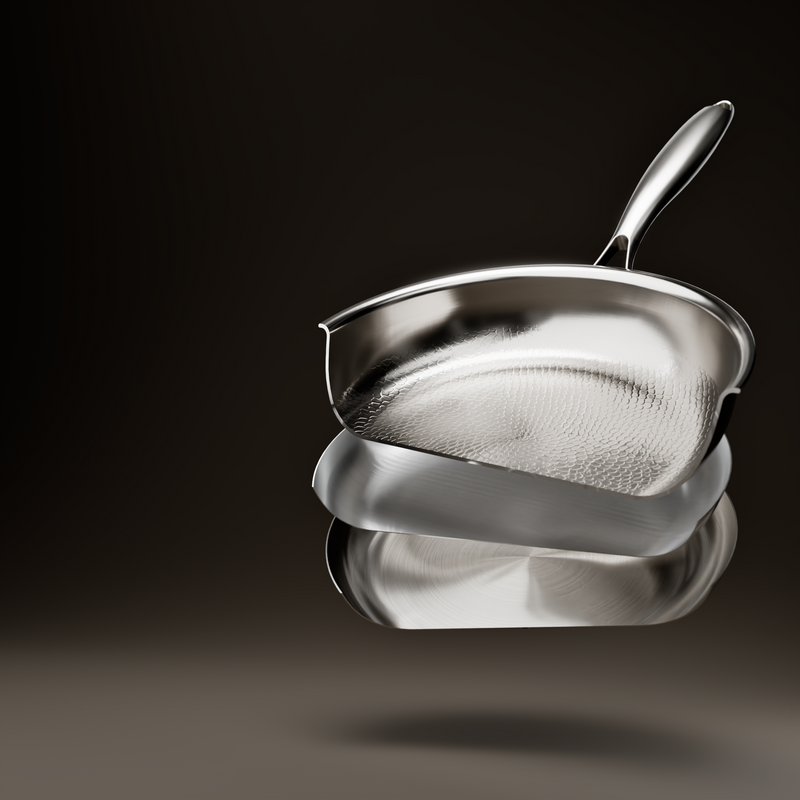
The cooking surface is the material itself. Nothing sprayed on, nothing bonded over aluminium, nothing engineered to wear out on a schedule.
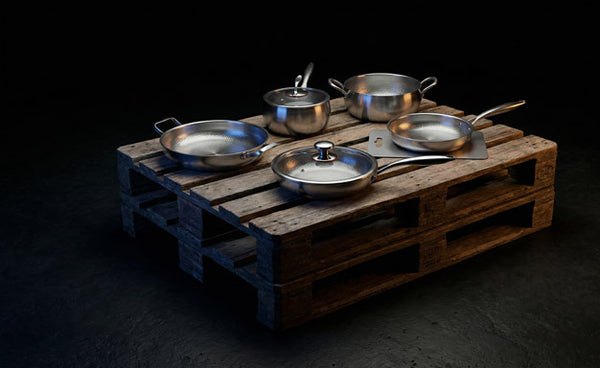

The cookware built to end the replacement cycle and keep PFAS out of your food
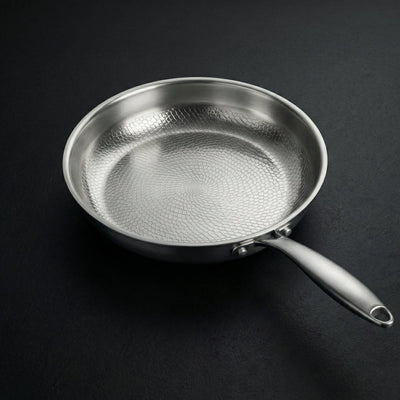
Solid Grade 1 titanium, hand-hammered over six and a half hours into a micro-textured surface that releases food on its own. No PFAS. No PTFE. No coating to scratch off, flake, or replace. Backed for 25 years.
Buy Now · from $104.95
One pan. Nothing between your food and the metal.
Your pan has been putting something on your plate for years, and you have had no way to see it. Okura removes the variable instead of managing it. There is no coating on this pan, so there is nothing that can break down, thin out, or end up in dinner.
zero coatingThe cooking surface is the material itself. Nothing sprayed on, nothing bonded over aluminium, nothing engineered to wear out on a schedule.
 hand-hammered
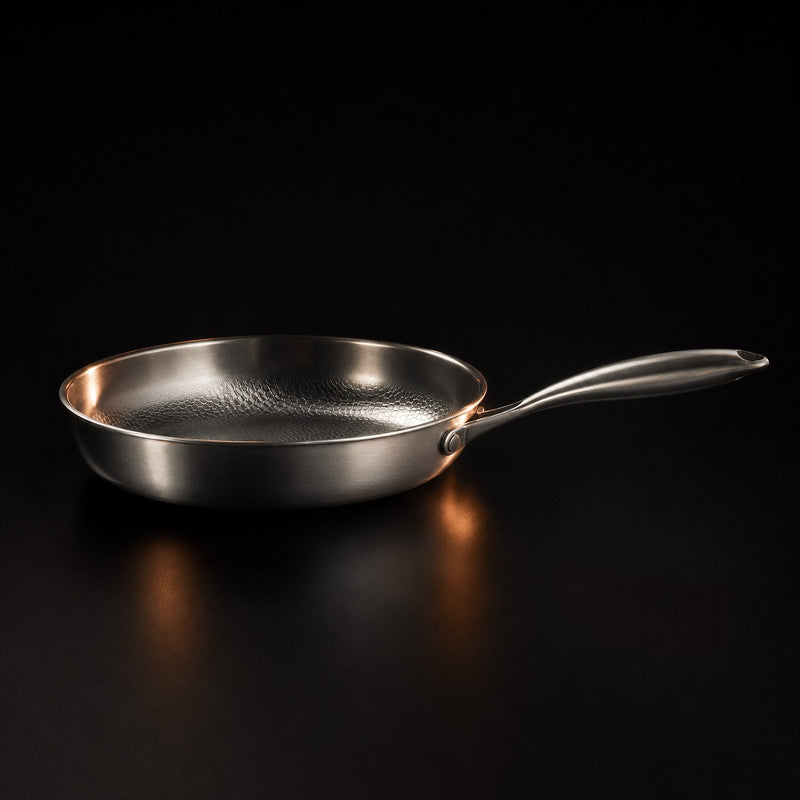
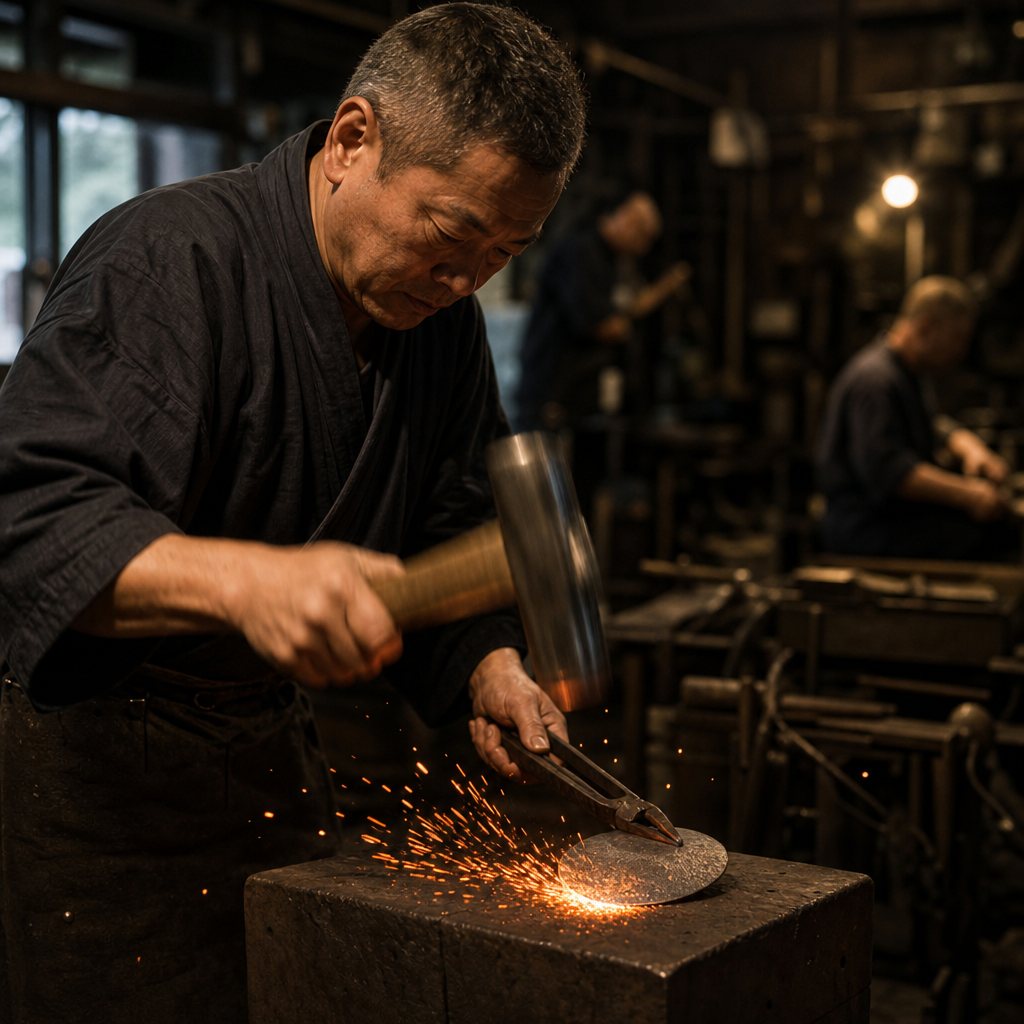
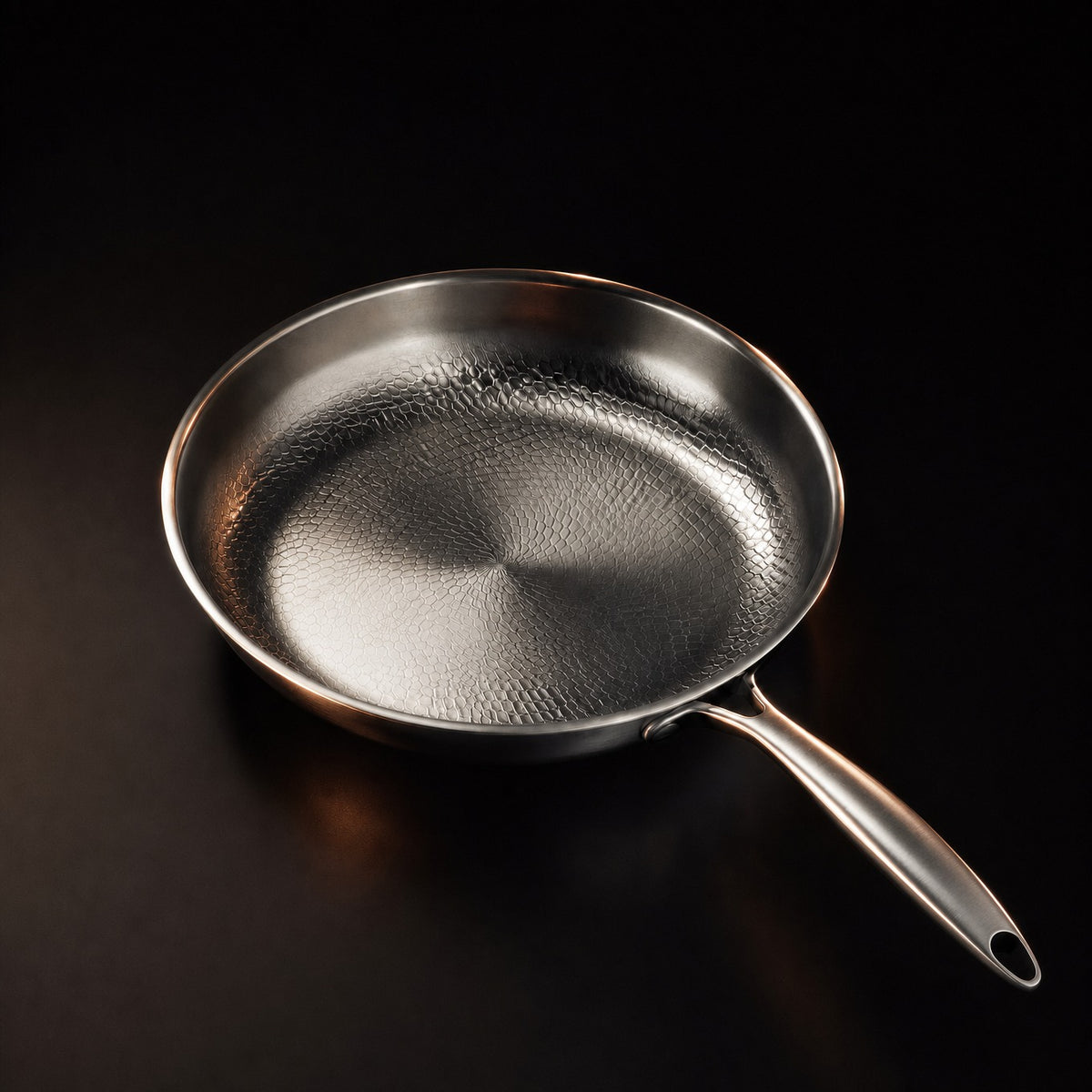
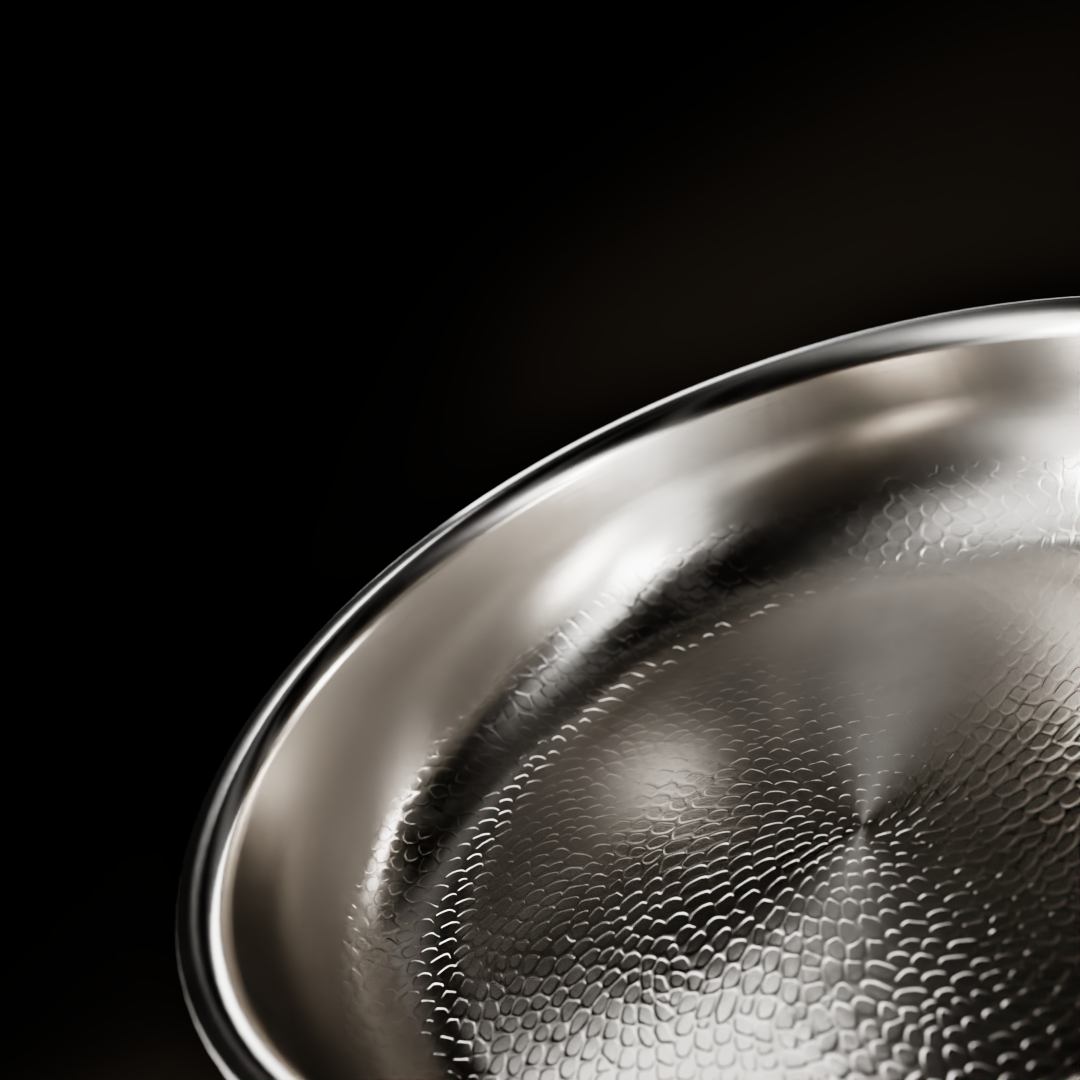
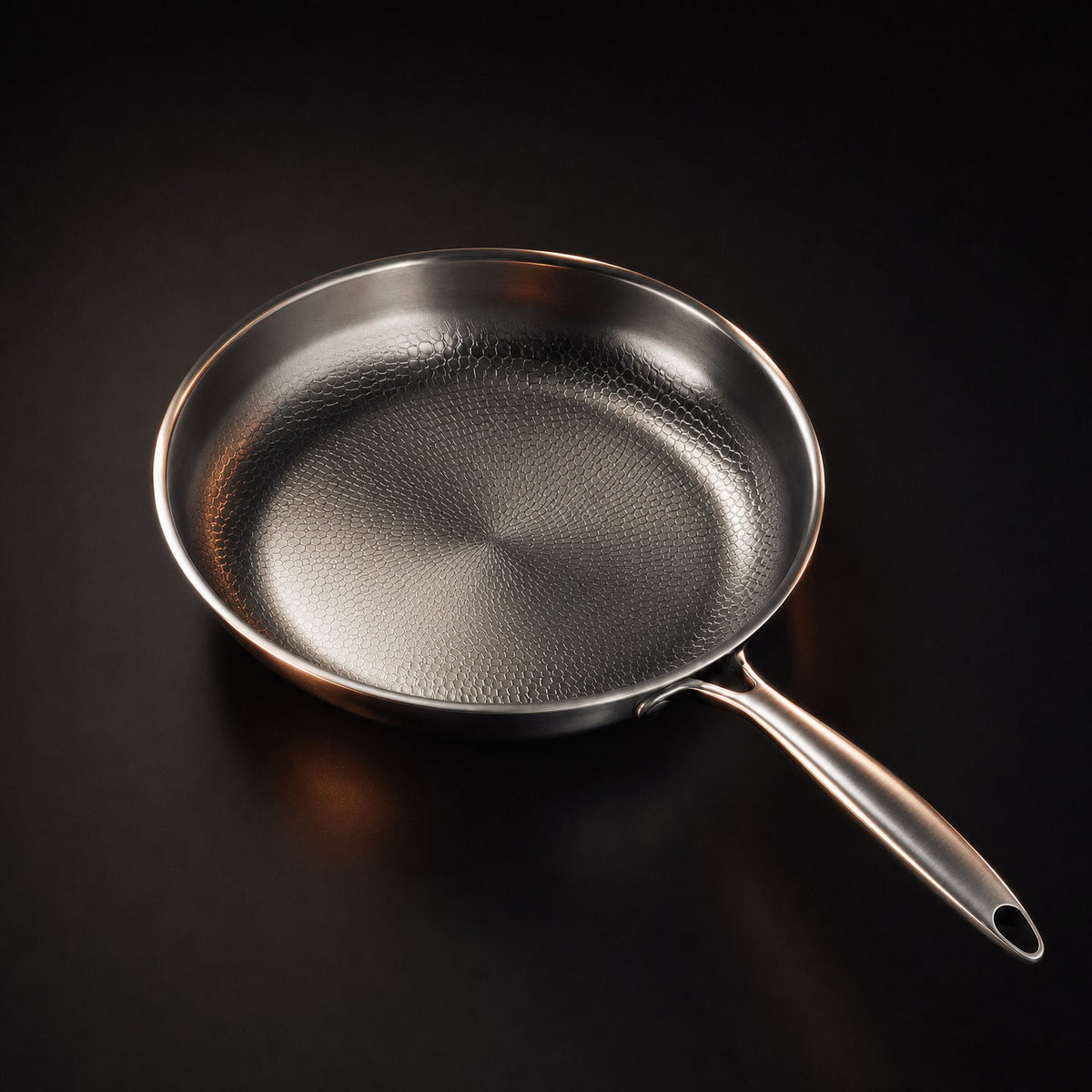
A flat titanium disc is worked by hand into a micro-textured surface, thousands of strikes at a time. That texture is the non-stick.
 thermal ceiling
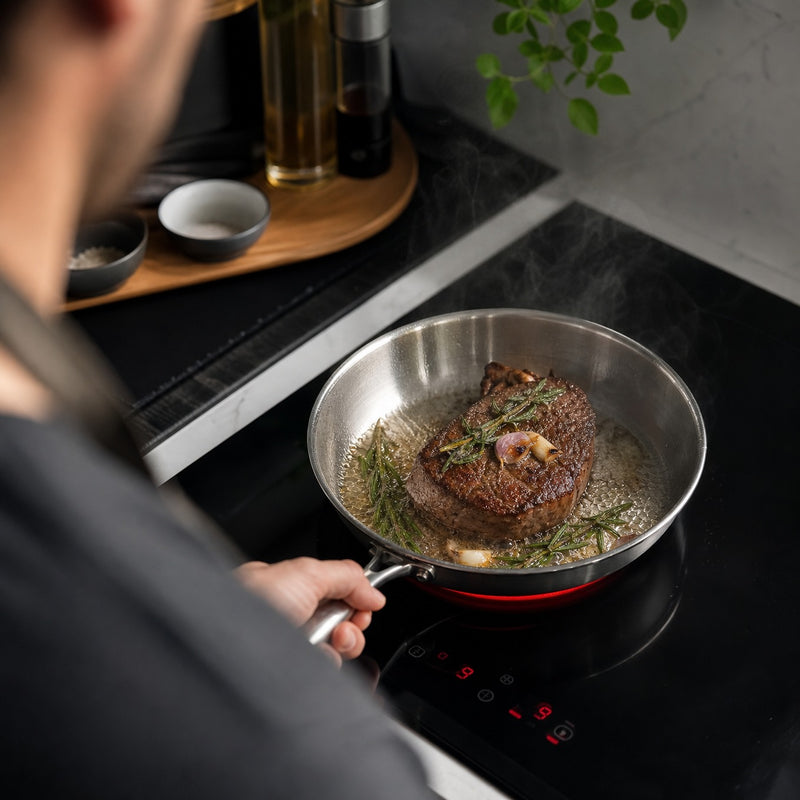
Sear, roast, finish in the oven, cook over an open flame. There is no synthetic layer to blister, bubble, or burn off at temperature.
Everything you stopped doing for your pan
Coated cookware quietly rewrites how you cook. Lower the heat. Skip the metal spatula. Hand wash only. Okura was built to hand all of that back.
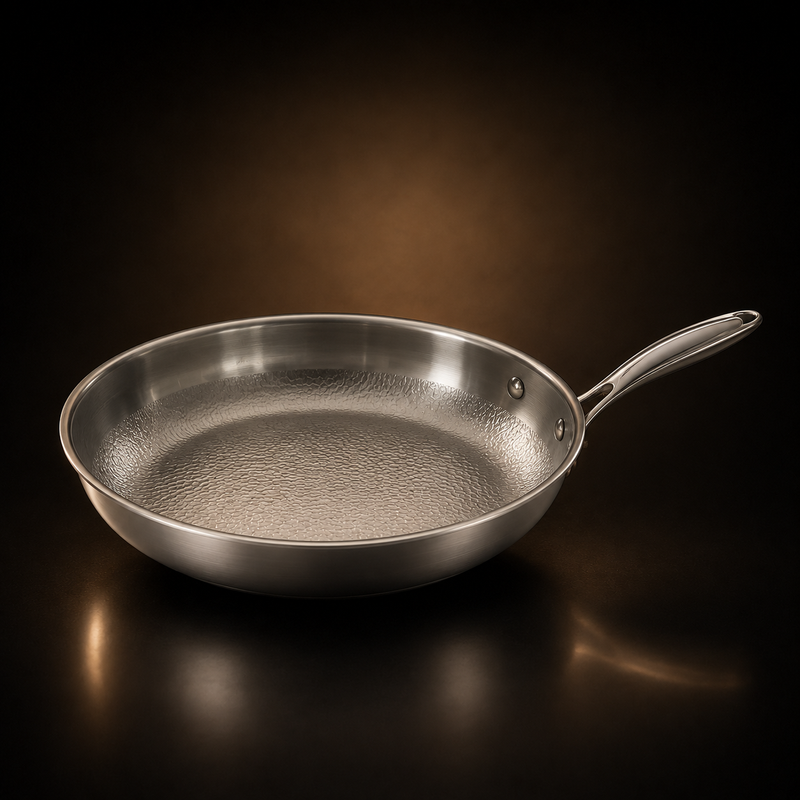
Spatulas, tongs, whisks, a metal fish slice. There is no coating to protect, so there is nothing to second-guess mid-flip.
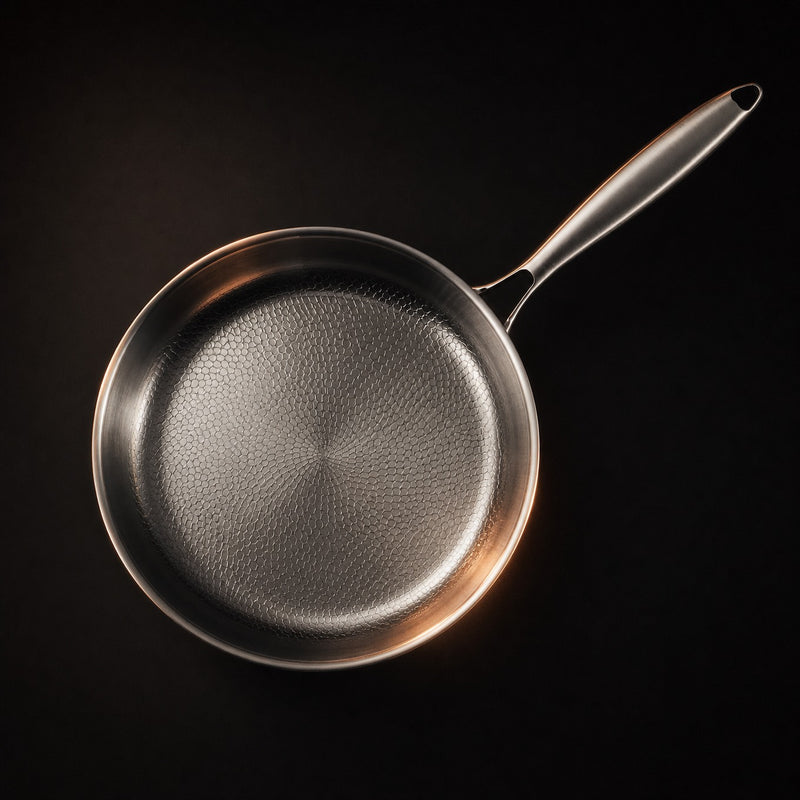
Titanium spreads heat edge to edge through an aluminium core. No hot centre, no cold rim, no constant adjusting.
Performance comes from the material, not a surface layer. There is no gradual decline for you to compensate for.
Regular cooking builds a natural patina in the hammered texture. It develops rather than wears out, because there is nothing underneath to reach.
Gas, electric, ceramic, induction, oven to 1000°F, grill, open flame. No adapters and no compatibility rules.
Non-reactive and corrosion-proof. Dishwasher safe, although warm water and thirty seconds is usually all it takes.
Most households replace a coated pan every one to two years. This one is covered against manufacturing defect for twenty-five.
47 pans were bought anonymously from EU and US retail channels, blinded so neither the analyst nor the technicians knew the brand, and put through four independent tests.
Test one filled each pan with a mildly acidic solution at 180°C for thirty minutes, then ran the leachate through ICP-MS at a detection threshold of 0.05 PPB. The EU reference threshold is 1.0 PPB.
The Okura sample came back below the limit of detection.
“The methodology is clean. PFAS levels at this concentration are not minor. I have switched our home kitchen to Okura.”
Dr. K. Yamada · Food chemistTest two ran 1,000 simulated cooking cycles against a programmed metal-spatula rig, a regime built to mirror four to five years of domestic kitchen use.
Surface mass loss was measured before and after, then confirmed with scanning electron microscopy at 200x and 1000x. Coated samples lost up to 96% of their surface.
The Okura sample lost less than 0.1%, with an intact micro-textured lattice under SEM.

“It is the only pan we tested that arguably improves with use rather than deteriorating with it.”
Dr. M. Reijnders · Lead analyst, independent EU materials labCoated pans release food because of a chemical layer. As that layer thins, release goes with it, and no amount of technique brings it back.
Hammered titanium works on geometry instead. The micro-texture lifts food off the contact points and holds a thin film of oil at temperature, the way a well-seasoned cast iron pan does without the maintenance. It asks for a preheat and a little fat. In exchange, it does not fade.
Test three held every pan at its own stated maximum for thirty minutes.
“Came in skeptical of titanium and left a convert. Hammered surface releases like cast iron without the upkeep.”
James R. · Verified buyer, Austin TXShaped by hand. Verified by one lab.
Hand-hammered in small batches, then bought anonymously off the shelf and blind-tested by an independent EU materials lab that holds no contract with any cookware manufacturer.
“It is the only pan we tested that arguably improves with use rather than deteriorating with it. It is also the only one we tested that contained nothing we were trying to look for.”
Dr. M. Reijnders · Lead analyst, independent EU materials lab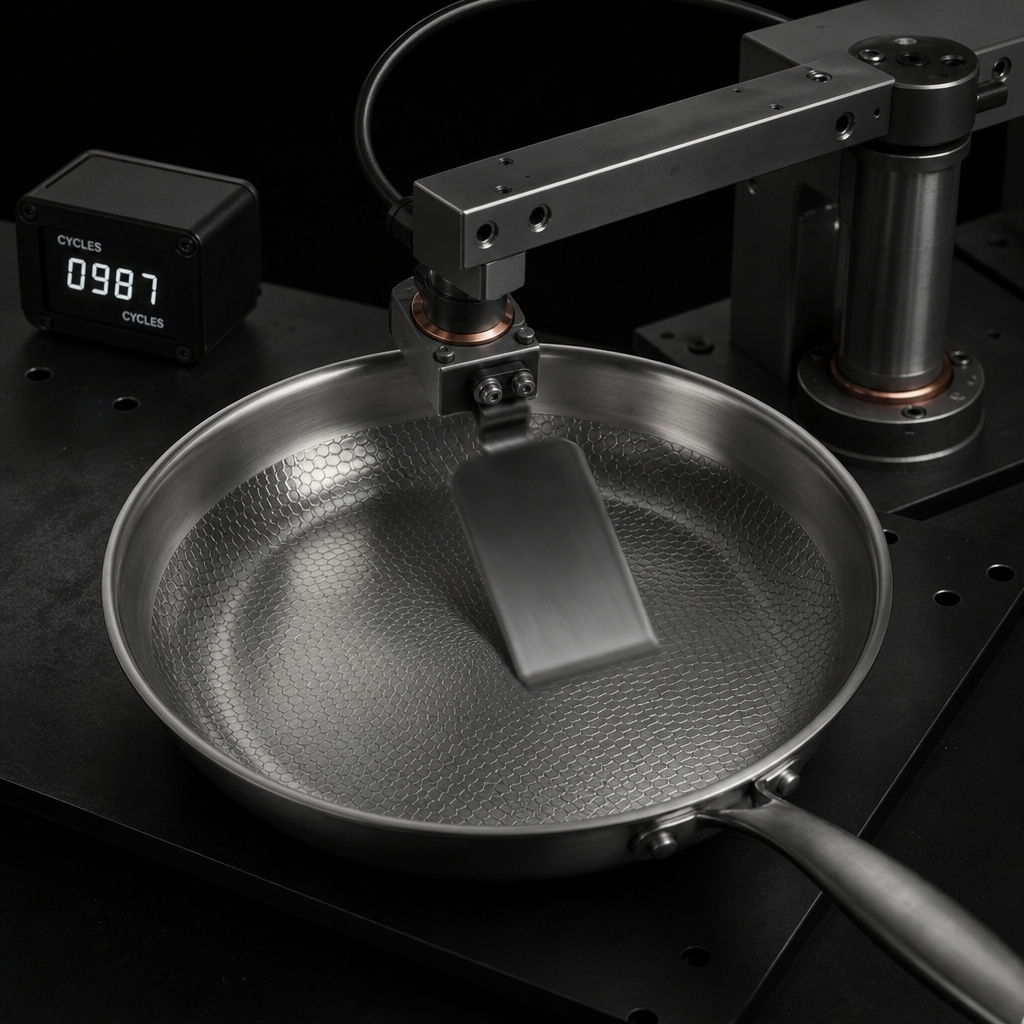
“The methodology is clean. PFAS levels at this concentration are not minor. I have switched our home kitchen to Okura.”
Dr. K. Yamada · Food chemist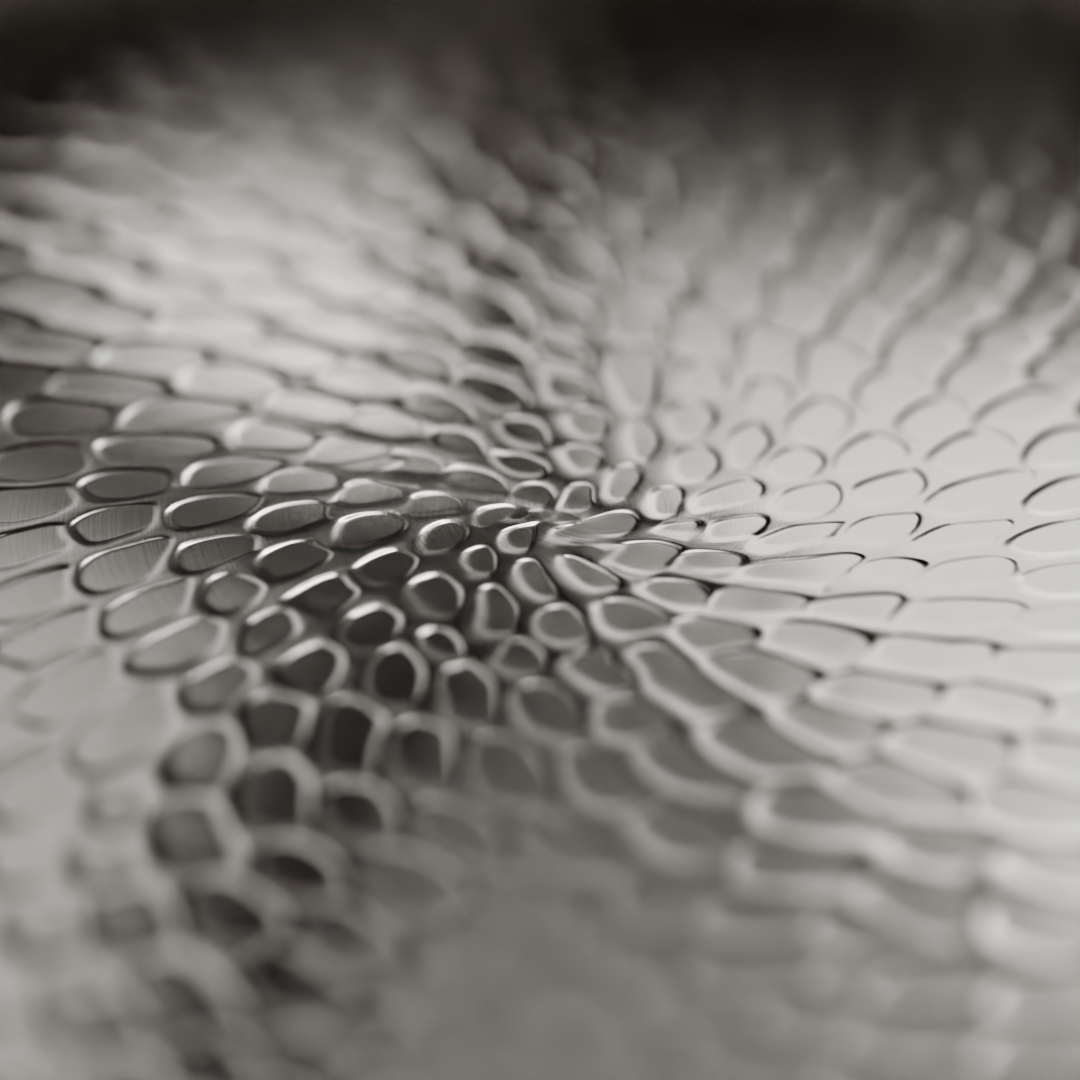
“First piece of independent testing on cookware I have cited as actionable. The pan genuinely performs.”
Chef A. Moreno · Two-star, Netherlands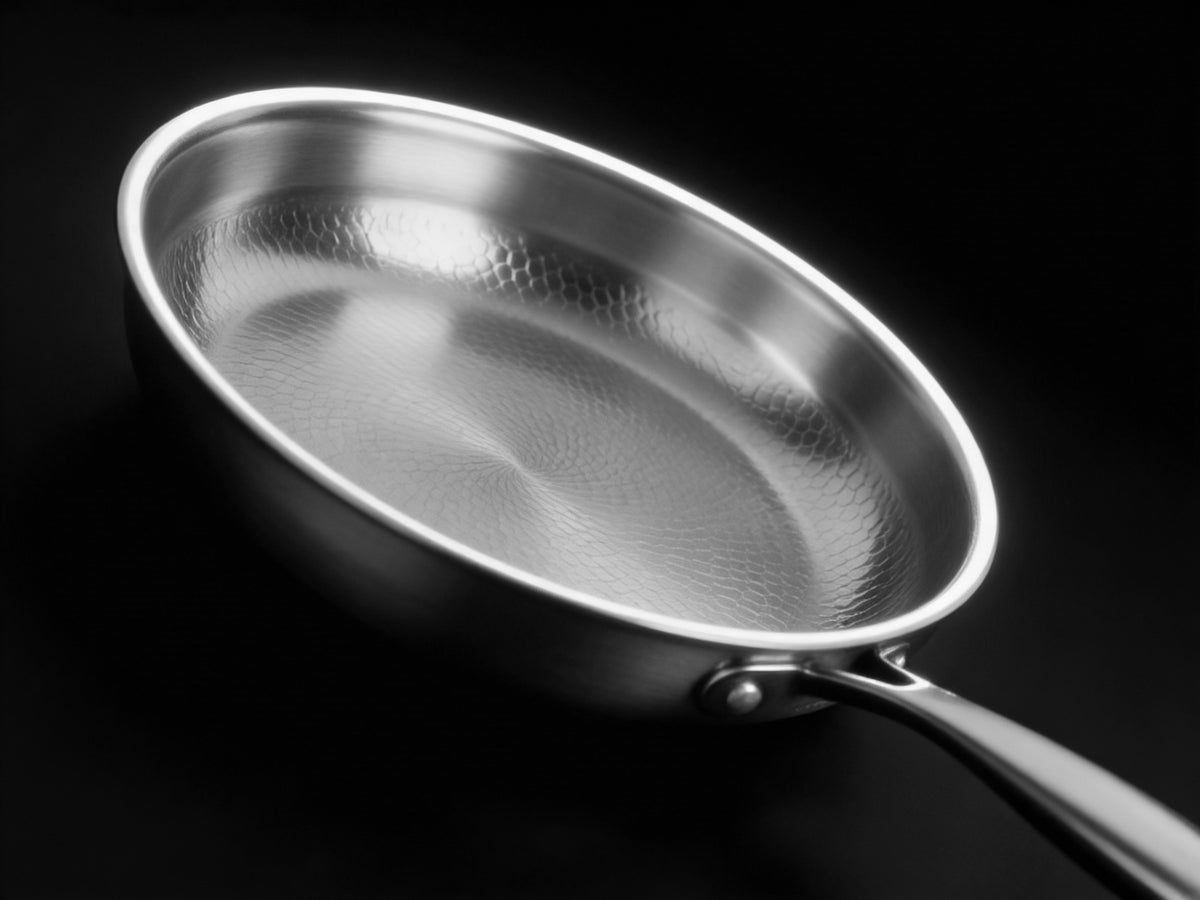
Of 47 pans sent to the lab, one passed every test. It is the one on this page.
Thirty-one brands. Four blind tests designed to mirror four to five years of daily cooking. Coated pans failed on chemistry, on abrasion, or on heat, and most failed on more than one. A single sample came back below detection for PFAS, under 0.1% surface loss after a thousand cycles, and zero thermal events at 1000°F.
Buy NowOther pans coat their surface. We hammered ours.
Most cookware sold as titanium is aluminium or steel wearing a sprayed coating with a fraction of a percent of titanium dust in it, just enough to legally print the word on the box. When that coating fails, people blame titanium. There was never any titanium touching their food.


Where the non-stick actually comes from
Between 4,200 and 4,800 hammer strikes leave dimples across the face of the pan, cutting the contact area between food and metal.
That texture holds a thin film of oil at temperature, so food rides on the film instead of bonding to the surface. It is the same mechanism as a well-seasoned cast iron pan, without the maintenance.
Titanium re-forms its own protective oxide the moment it is exposed. It is the property that lets surgeons leave the metal inside the human body for decades.
Regular cooking deepens the patina sitting in the hammered texture. There is no coating underneath for it to reach, so the surface gets better rather than thinner.
The Okura pan isn't another non-stick
It was not designed to compete with coated pans. It was designed to replace them.
| Coated non-stick | Stainless steel | Cast iron | Okura titanium | |
|---|---|---|---|---|
| Food-contact surface | Fluoropolymer coating | Stainless steel | Seasoning over iron | Grade 1 titanium |
| PFAS present | PTFE is a PFAS | None | None | Below detection in lab test |
| Metal utensils | No | Yes | Yes | Yes |
| Seasoning needed | No | No | Constant | None |
| Typical lifespan | 1 to 2 years | Decades, but food sticks | Decades, with upkeep | 25-year warranty |
| Weight | Light | Heavy | 3 to 5 kg | About 45% lighter than steel |
| Max heat | Limited by the coating | High | High | 1000°F, oven and flame |
| Dishwasher | Destroys the coating | Yes | Never | Yes |
| Ten-year cost | 5 to 10 replacements | One pan, daily friction | One pan, daily upkeep | One pan |
Most households replace a coated pan every one to two years. Over a decade that is five to ten pans, five to ten deliveries, and five to ten trips to landfill.
Okura is bought once. The warranty runs for twenty-five years, which is longer than most people keep a kitchen.
"Bought once. Covered against manufacturing defect for twenty-five years."
"Cheaper today, and again in eighteen months, and again after that."
This turns cookware from an expense into a fixed asset.
Most cookware sold as titanium is aluminium or steel carrying a sprayed coating with a fraction of a percent of titanium dust mixed in, enough to legally print the word on the box.
When that coating peels, buyers blame titanium. There was never any titanium touching their food.
"The cooking surface is solid Grade 1 titanium. No coating, no blend, no spray."
"Titanium-infused. Titanium-reinforced. Titanium technology."
Those three phrases all describe a coating with a marketing word attached.
Coated cookware quietly rewrites your habits. No metal. Not too hot. Never the dishwasher. Do not scrub. Cooking starts to feel like following rules instead of making food.
Okura has nothing to protect, so none of those rules apply. Preheat, cook, clean.
"Use the tools you actually cook with."
"Wooden or silicone utensils only. Low to medium heat. Hand wash."
You do not adjust to the pan. The pan adjusts to you.
Four blind tests: PFAS leachate by ICP-MS, 1,000-cycle abrasion against a metal-spatula rig, a thirty-minute thermal hold at each pan's own stated maximum, and pre- and post-test SEM imaging.
The category failure rate was 97.9%. That is not a tail risk, it is the normal outcome.
"Below detection for PFAS. Under 0.1% mass loss. Zero thermal events at 1000°F. Intact lattice under SEM."
"Measurable PFAS, up to 96% surface loss, visible flake at stated max heat."
The lab was EU-based and contracted for the test window only, with no product, royalty, or recurring contract from any manufacturer.
What changed once people stopped cooking on a coating
“The Okura titanium pans are the only set that offers an 8 inch egg pan along with the 10 and 12 inch pans, so that helped me decide. They are great. No stick for eggs, great for stir-fry, searing salmon and meat in the larger pans. The weight is perfect: the pan is light but the handle gives it balance.”
“Love the pans. It does take getting used to. Heat the pan first, then add oil or butter, add your food and let it cook. It will unstick by itself. Cleanup is amazingly easy. Wish I had these years ago as a chef.”
“I love the look of the pan and it feels premium. I also love the lack of chemicals and toxic coatings. It cooks perfectly, is easy to clean, and it goes from hob to oven without a second thought.”
“It heats evenly, nothing sticks to it, and it is easy to clean. I am very glad to have taken the leap and spent the money.”
“The first pan was the 12 inch. Easy cooking at a lower heat than I am used to. The first time I had to adjust my temperature down as I started burning the meat. Remember it cooks the whole surface evenly.”
“I have been using my new pans since the moment I received them. The best part: I do not need to sound the alarm when someone scratches the inside. It does not leave any streaks or remove any finish. What a game changer.”


The last pan you'll ever buy
Naturally non-stick without PFAS, PTFE or any coating. Metal-utensil safe, induction to a 1000°F oven, around 45% lighter than steel, backed for 25 years.
Cook on it at home for a month. If it is not the pan you wanted, send it back and we refund the purchase. No questions, no restocking fee.
"The Okura titanium pans are the only set that offers an 8 inch egg pan along with the 10 and 12 inch pans, so that helped me decide. No stick for eggs, great for stir-fry, searing salmon and meat in the larger pans. The weight is perfect. They cost a bit but it is top-quality cookware."
Martin B.Verified buyer
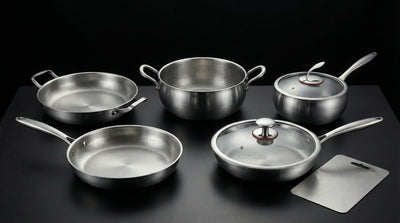
Three bonded layers. Only the top one ever touches food.
Titanium releases food differently to a coated pan. Four steps, and it becomes automatic.
Two to three minutes on medium. Titanium conducts heat efficiently, so you need less heat than you are used to, not more. Flick a drop of water on it: when the drop beads and skates across the surface, the pan is ready.
A teaspoon of oil or a knob of butter, swirled once. Then the food. That thin film sitting in the hammered texture is what does the releasing.
Food bonds when it meets bare metal and then gets moved. Let a crust form and it releases on its own, usually inside a minute or two. If it resists, it is not ready yet.
Warm water and a soft sponge, about thirty seconds. Dishwasher safe if you prefer. A darkening patina in the texture is the pan improving, not wearing out.
This is not a coated pan and it does not behave like one on day one. Almost every complaint we see about sticking comes down to going in too hot or too dry. Give it three cooks with the steps above. If it still is not for you, the 30 days are there for exactly that.
Most people only find out what their cookware is made of after it starts flaking. You do not have to.
Frequently asked questions
Traditional non-stick relies on a chemical coating, usually PTFE. Okura has no coating at all. The cooking surface is solid Grade 1 titanium, hand-hammered into a micro-texture that releases food on its own. Nothing is sprayed on, so there is nothing that can scratch off, flake, or degrade.
When the pan is preheated properly it releases cleanly with very little oil. It is not a coated pan and it does not behave like one straight out of the box. Preheat empty on medium for two to three minutes, add a teaspoon of fat, then the food, and let a crust form before you move it. Almost every sticking complaint we see traces back to going in too hot or too dry.
Yes. There are no PFAS, PTFE, PFOA, or synthetic non-stick layers anywhere on the cooking surface. In independent blind testing the Okura sample came back below the limit of detection for PFAS in the leachate.
Yes. Stainless spatulas, tongs, and whisks are all fine. There is no coating to protect, so there is nothing for them to damage.
Gas, electric, ceramic, induction, oven up to 1000°F, grill, and open flame. The magnetic stainless exterior handles induction and the titanium surface handles the heat.
Titanium is around 45% lighter than steel. The 12 inch pan comes in at roughly 2.1 lbs, which is close to half the weight of a comparable cast iron or stainless pan.
No. There is no seasoning ritual and no rust risk. The hammered surface develops a natural patina with regular cooking, which improves release rather than requiring maintenance.
If the pan develops a manufacturing defect within 25 years of purchase we replace it free of charge. It covers everything except deliberate damage.
You have 30 days. Cook on it at home, and if it is not the pan you wanted, send it back for a full refund. No questions and no restocking fee.
Yes. Titanium is non-reactive and corrosion-resistant, so the dishwasher does not affect it. A rinse with warm water is usually faster.
A flat disc of Grade 1 titanium is worked by hand for roughly six and a half hours, taking between 4,200 and 4,800 hammer strikes. What comes out is not a decorative finish. It is a lattice of shallow dimples across the whole cooking face.
Coated pans release food because a chemical layer sits between the food and the metal. That layer is consumable. It thins with heat, abrasion, and time, and when it is gone the release goes with it.
The dimples cut the contact area between food and metal, and at temperature they hold a thin film of fat in place across the surface. Food rides on that film rather than bonding to the pan. It is the same physics that makes a well-seasoned cast iron pan work, without the seasoning ritual, the rust risk, or the weight.
Nothing is being consumed. There is no layer to scratch through, so metal utensils are simply not a concern. Regular cooking deepens the patina held in the texture, which is why owners describe the pan as improving over months rather than declining.
Grade 1 is commercially pure titanium, the softest and most corrosion-resistant of the commercially pure grades. It is the same family of material used in surgical implants, because it is non-reactive, biocompatible, and re-forms its own protective oxide layer on contact with air.
Most cookware sold as titanium is aluminium or steel carrying a sprayed coating with a fraction of a percent of titanium dust mixed in, enough to legally print the word on the box.
Look for a plain statement that the cooking surface is solid titanium with no coating. The phrases to walk away from are titanium technology, titanium-infused, titanium-reinforced, and titanium-style. Each of those describes a coating with a marketing word attached.
Non-reactive means no metallic taste and no reaction with acidic ingredients. Corrosion-resistant means no rust and no seasoning. Stable means the surface you buy is the surface you still have in twenty years.
