



Comparisons
Best Whetstone for Kitchen Knives
Ask what the best whetstone is and the honest answer is: the one that matches your knives and that you will actually use. A whetstone sharpens by grinding a fresh edge on abrasive stone, and it gives far more control than any pull-through gadget. The trick is understanding grit, stone type and your own steel — then the choice is simple.
Grit, explained
Grit is the single most important number on a whetstone. It describes how coarse or fine the abrasive is, and it maps directly to a job:
- Coarse (200–600): repairs chips and reshapes a very dull or damaged edge. Used occasionally.
- Medium (800–1500): the core sharpening range. A 1000-grit stone is the everyday workhorse that restores a working edge.
- Fine (3000–8000): refines and polishes the edge to push-cutting sharpness. A 6000-grit finish is plenty for most kitchen knives.
For most home cooks, a single 1000/6000 combination stone — coarser on one side, fine on the other — covers almost everything: sharpen on the 1000, refine on the 6000. It is the most sensible first, and often only, whetstone to buy.
Water stones, oil stones and diamond plates
Whetstones come in three broad types, and each has an honest trade-off:
- Japanese water stones cut quickly, feel smooth, and finish beautifully — ideal for the harder steel of Japanese knives. They need a soak or a splash of water and must be flattened periodically as they wear.
- Oil stones (Arkansas, India) are durable and low-maintenance but cut more slowly and are messier with oil. A traditional, forgiving choice.
- Diamond plates cut aggressively, stay dead flat forever, and never need flattening — but they are less refined at the fine end and cost more.
For kitchen knives, a Japanese water stone is the usual recommendation: fast, precise, and kind to good steel.
The best whetstone is the one you will actually use — and for most home cooks, that is a 1000/6000 combination water stone.
What else to look for
- Size: a larger stone (around 8 inches) gives longer, more consistent strokes and suits bigger blades.
- A stable base: a non-slip holder or rubber base keeps the stone still and your hands safe.
- A flattening stone: water stones dish out with use; a flattening plate keeps the surface true. Worth adding early.
Match the stone to your knives
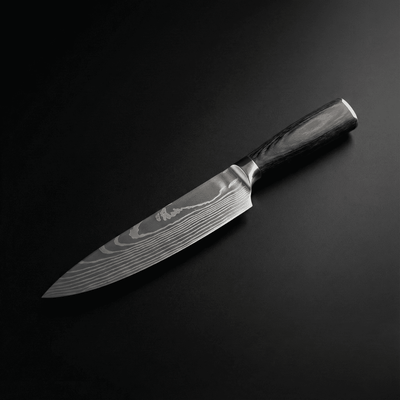
Steel matters. Harder Japanese knife steel takes and holds a very fine edge, so it rewards finishing on a higher grit — a 6000 or even 8000 stone brings out its best. Softer Western stainless does not need to go as fine and is happy finished around 3000–4000. If your knives are Japanese, lean toward a water stone and a finer finishing grit; if they are a mixed set, the 1000/6000 combination covers both. See the blades this pairs with in our chef's knives collection.
How often should you sharpen?
Sharpening removes metal, so it is not an everyday job. For a home cook, a full whetstone sharpening every one to three months is plenty, with regular honing on a rod in between to keep the edge aligned. If a knife struggles to bite into a tomato skin or slips on an onion, it is time. Between sessions, a light pass on the fine side of your stone can refresh the edge without a full sharpen. Learn the rhythm and a single good whetstone will keep an entire knife block performing for years.
The Cookware
Built to Last
Uncoated grade-1 titanium. No PFAS, no coatings, backed by a 25-year warranty.
Shop the Collection