



Care & How-To
How to Use a Honing Rod
Knowing how to use a honing rod is the difference between a knife that feels sharp every day and one that seems to dull within a week. A honing rod — the long steel that comes with most knife blocks — takes seconds to use and keeps a keen edge keen. It is the most underused tool in the kitchen, largely because people are not sure what it is for or how to hold it. Here is the whole thing.
First, what a honing rod actually does
A honing rod does not sharpen. It straightens. With everyday use, a knife's fine edge rolls slightly to one side and starts to feel dull even though the steel is still sharp. Running the blade along the rod pushes that edge back into alignment, restoring the bite instantly. Almost no metal is removed — you are realigning, not grinding — which is why you can hone constantly without wearing the knife down. When honing stops working, that is your cue to sharpen, which is a separate job.
The one thing that matters most: the angle
Honing works when you hold the blade at roughly the same angle as its edge — about 15 to 20 degrees for most kitchen knives. Too steep and you scrape the edge; too shallow and you miss it entirely. A simple way to find it: rest the blade flat against the rod, then tilt it up about halfway to 45 degrees, then halfway again. That gets you close. As with everything sharp, consistency beats precision — the same angle every stroke is what counts.
Method 1: Tip down (the stable way)
This is the easiest method to control and the best place to start.
- Stand the rod vertically, tip pressed firmly onto a cutting board or a folded towel to stop it slipping.
- Hold the knife near the top of the rod at your honing angle, heel of the blade against the steel.
- Draw the knife down and toward you in a smooth arc, sweeping from heel to tip so the whole edge passes over the rod.
- Alternate sides — one stroke on the left of the rod, the next on the right — keeping the angle even.
Because the rod is braced against the board, there is no balancing act; you can focus entirely on the angle.
Light contact, steady angle, both sides evenly. Honing is a gentle sweep, not a hard scrape — you are guiding the edge, not forcing it.
Method 2: In the air (the classic way)
The horizontal, held-in-the-air method is what you see chefs do, and it is quick once you have the feel — but it is harder to keep the angle consistent, so it is worth mastering the braced method first. Hold the rod out in front of you, and sweep the blade across it from heel to tip, alternating sides. Keep the movement light and controlled. If your angle wanders, go back to the tip-down method until it is second nature.
How many strokes?
Not many. Four to six light strokes per side is plenty for routine maintenance. Honing is about frequency, not effort — a few gentle passes often will do far more than a lot of hard ones occasionally. If a dozen strokes make no difference, the edge is not rolled, it is worn, and the knife needs sharpening instead.
How often should you hone?
Often. Many cooks give a knife a few passes before each use or every few uses. It takes seconds, keeps the edge performing at its best, and dramatically reduces how frequently you need to sharpen. Think of it as the between-service tune-up that keeps the real sharpening for once in a while.
Common mistakes to avoid
- Wrong angle — too steep damages the edge, too shallow does nothing.
- Too much pressure — honing is gentle; force is counter-productive.
- Expecting it to sharpen — a rod cannot fix a truly dull edge; that is a job for a whetstone.
- Skipping it entirely — the single most common reason good knives feel dull.
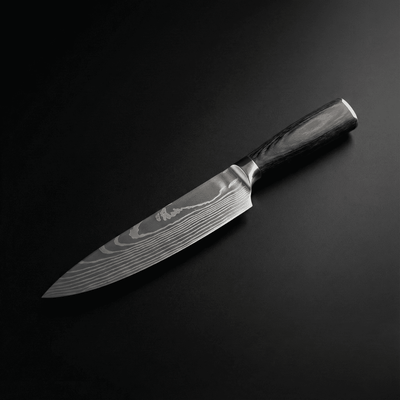
Honing keeps the edge; sharpening restores it. If you are unsure which your knife needs, our guide to honing vs sharpening clears it up, and when the rod stops bringing the bite back, sharpening a knife on a whetstone covers the next step. It all matters most on a blade worth maintaining — see the chef's knives collection for knives that hold the edge you give them.
The Cookware
Built to Last
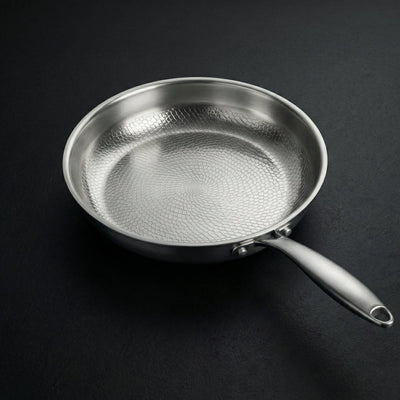
Uncoated grade-1 titanium. No PFAS, no coatings, backed by a 25-year warranty.
Shop the Collection