



Comparisons
Carbon Steel vs Stainless Steel Pans
Set a carbon steel pan vs stainless steel and you are choosing between two very different philosophies of cooking. Carbon steel is a bare, seasoned surface that becomes non-stick with use; stainless steel is an inert, low-maintenance workhorse that never needs seasoning. Both are professional-kitchen staples, and both are excellent — at different things.
Carbon steel: a surface you build
Carbon steel is thin, bare steel that you season with oil to develop a dark, slick patina. Once broken in, it offers a genuinely natural non-stick surface — enough for eggs and crepes — with none of the coatings of conventional non-stick. It takes very high heat, sears superbly, is lighter than cast iron, and heats quickly and responsively. It is the pan of choice for many chefs and for wok cooking.
Its weaknesses are the price of that bare surface. Carbon steel is reactive: cook acidic foods like tomato or wine and you will strip seasoning and risk a metallic taste. It rusts if left wet, it needs seasoning and careful drying, and it is not dishwasher-safe. It asks for a relationship, not just a rinse.
Stainless steel: inert and low-maintenance
Stainless steel makes the opposite bargain. It is completely non-reactive, so acidic sauces, tomatoes and wine reductions are no concern. It needs no seasoning, tolerates the dishwasher, resists rust, and — in a clad build — heats evenly thanks to its aluminium or copper core. It browns well and builds fond for sauces.
What it does not do is release food on its own. Bare stainless has no non-stick quality at all, so a proper preheat and enough fat are essential, and there is a learning curve to cooking eggs or fish on it cleanly.
Carbon steel rewards maintenance with a natural non-stick surface. Stainless steel rewards convenience with a surface that never needs babying. Pick the bargain that fits how you cook.
Carbon steel vs stainless, side by side
- Natural non-stick: carbon steel, once seasoned.
- Acidic foods: stainless — carbon steel reacts and loses seasoning.
- Maintenance: stainless is far lower; carbon steel needs seasoning and drying.
- Searing and high heat: both excel.
- Weight: carbon steel is lighter than clad stainless in most sizes.
- Dishwasher: stainless only.
Which should you choose?
Choose carbon steel if you enjoy the craft of a seasoned pan and want a natural non-stick surface for high-heat cooking and eggs — and you will keep acidic dishes to other pans. Choose stainless steel if you want a do-everything pan that handles acids, needs no seasoning, and survives the dishwasher and years of hard use. Many kitchens keep both, using carbon steel for searing and stainless for sauces.
A coating-free middle ground
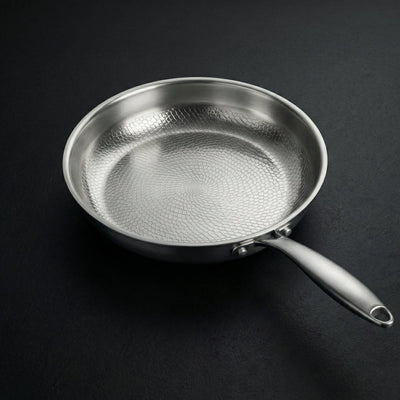
If carbon steel's natural release appeals but its seasoning and rust upkeep do not, solid titanium is worth considering. It is non-reactive like stainless — acidic foods are fine — yet releases food naturally with a preheat, the way seasoned carbon steel does, and it never needs seasoning and will not rust. It is inert, metal-utensil safe, and around 45% lighter than stainless. See how it is built in our Japanese pans collection.
The Cookware
Built to Last
Uncoated grade-1 titanium. No PFAS, no coatings, backed by a 25-year warranty.
Shop the Collection