



Comparisons
Cast Iron vs Carbon Steel: Full Comparison
The cast iron vs carbon steel question comes up because the two are close cousins. Both are essentially iron, both rely on seasoning rather than a coating, both are oven- and flame-safe, and both reward you with a natural, low-stick patina over time. The differences are in the details — and those details decide which belongs in your kitchen.
What they share
Cast iron and carbon steel are both bare iron alloys you season with oil to build a slick, protective patina. Neither has any manufactured non-stick coating, so there is no PFAS or PTFE and nothing to flake off. Both take high heat, both go into the oven, both can sit over an open flame, and both will rust if left wet. Treat either one well and it lasts for generations.
Cast iron: mass and heat retention
Cast iron is thick and heavy, and that mass is the point. It takes longer to heat, but once hot it holds temperature through anything you throw at it — a cold steak hitting the pan, a batch of frying, a loaf of cornbread moved to the oven. That heat retention is cast iron's defining strength. The downsides are the flip side of the same coin: it is heavy to lift and manoeuvre, slow to preheat, its surface is relatively rough, and it can crack if dropped or shocked with cold water.
Carbon steel: lighter and more responsive
Carbon steel is made from thinner rolled steel, so it is noticeably lighter and heats up faster and more evenly across the base. It responds quickly when you adjust the burner, which is why professional kitchens and wok cooks favour it for sautéing, eggs and anything that needs control. Its surface is smoother than cast iron's, and the sloped sides of a carbon-steel pan make it better for tossing and flipping.
The trade-off is heat retention: with less mass, carbon steel cools faster when you add food, so it is less suited to a long, heavy sear than a thick cast-iron skillet. It is just as reactive with acids and just as prone to rust, so the same seasoning and drying discipline applies.
Same iron, different mass. Cast iron holds heat; carbon steel is quicker and more nimble. Choose by the cooking you do most, not by which sounds tougher.
A word on seasoning
Neither pan arrives at its best. Both need seasoning — thin layers of oil baked on until the surface turns dark and slick — and both keep improving with use as that patina deepens. Carbon steel, being smoother and thinner, often builds a usable non-stick layer a little faster; cast iron's rougher surface takes longer but ends up extremely durable. Either way, the first few weeks are a break-in period, not a finished non-stick pan out of the box. Plan for it, and neither will disappoint.
Which should you choose?
- Cast iron for searing, deep-frying, baking and any dish that benefits from steady, held heat.
- Carbon steel for responsive stovetop cooking — sautéing, eggs, stir-frying, delicate flipping — where lighter weight and fast reaction help.
If maintenance is the sticking point
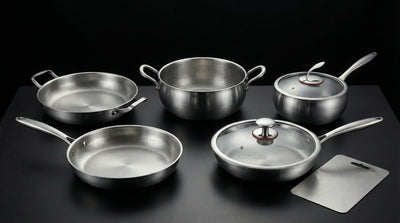
Both pans reward attention and punish neglect. If seasoning and rust-watching are not for you, solid titanium offers coating-free cooking without either: it is inert, naturally low-stick with a preheat, never needs seasoning, and will not rust. It cannot match a thick cast-iron pan's heat retention for a prolonged sear, but for lighter, everyday cooking it removes the upkeep entirely. See the range in our Japanese pans collection.
The Cookware
Built to Last
Uncoated grade-1 titanium. No PFAS, no coatings, backed by a 25-year warranty.
Shop the Collection