



Comparisons
Cast Iron vs Stainless Steel: Which to Cook With
The cast iron vs stainless steel debate is really a debate about temperament. One pan is heavy, patient and built for heat that lasts; the other is quick, low-maintenance and endlessly versatile. Neither is objectively better — they are good at different things, and knowing which is which is how you stop fighting your cookware.
What cast iron does best
Cast iron's superpower is thermal mass. All that metal takes a while to heat up, but once it is hot it holds temperature like nothing else — which is exactly what you want for a deep, even sear on a steak, for shallow-frying, or for cornbread that goes from stovetop to oven. It is inexpensive, effectively indestructible, and a well-seasoned pan develops a natural, low-stick surface over years of use. This is the one clear area where cast iron beats almost everything, titanium included: raw heat retention.
The costs are just as real. Cast iron is heavy, slow to preheat, and reactive — cook tomatoes or wine in a bare pan for long and you can strip seasoning and pick up a metallic edge. It needs seasoning and careful drying to keep rust away, and the cooking surface is comparatively rough.
What stainless steel does best
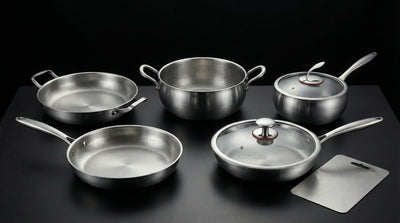
Stainless steel is the all-rounder. It is non-reactive, so acidic sauces, wine reductions and tomatoes are no problem. It is durable, low-maintenance, often dishwasher-safe, and it builds the browned fond that makes pan sauces sing. A good tri-ply or fully clad stainless pan, with an aluminium or copper core, also heats evenly and responds quickly to changes on the burner.
Its weakness is release. Bare stainless has no natural non-stick, so eggs and delicate fish will grab the surface unless you preheat properly and use enough fat. There is a genuine learning curve, and cheaper single-ply stainless can develop hot spots.
For a hard sear and heat that holds, cast iron is tough to beat. For low-maintenance, acid-friendly, everyday cooking, stainless earns its place on the hook.
How to choose between them
- Reach for cast iron when you want maximum heat retention: searing, frying, baking, anything that goes into the oven.
- Reach for stainless steel for sauces, sautés, acidic dishes and quick weeknight cooking where you want no maintenance and no seasoning to protect.
There is also the question of how long you keep them. Cast iron, cared for, is a generational tool; stainless steel shrugs off decades of hard use and the dishwasher besides. Both outlast disposable non-stick many times over, which is part of why they remain kitchen staples long after coated pans have come and gone. Plenty of serious cooks own both.
A modern middle path
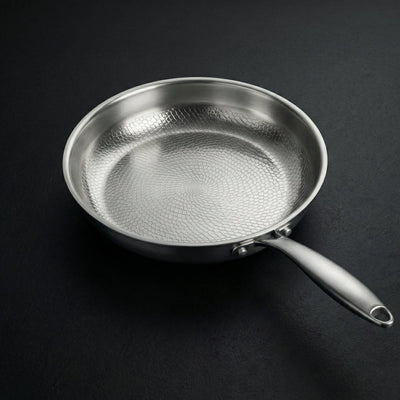
If the ideal is coating-free cooking without cast iron's weight or stainless steel's stickiness, solid titanium is worth a look. It is inert and non-toxic, naturally low-stick with a proper preheat, non-reactive like stainless, and around 45% lighter — and it moves from induction to oven without a second thought. It will not hold heat the way a thick cast-iron skillet does, so for prolonged searing cast iron still wins on that single measure. But for everyday cooking without seasoning or rust, it splits the difference neatly. Explore the range in our Japanese pans collection.
The Cookware
Built to Last
Uncoated grade-1 titanium. No PFAS, no coatings, backed by a 25-year warranty.
Shop the Collection