



Comparisons
Ceramic vs Titanium Cookware
The ceramic vs titanium cookware comparison trips people up because the two are not the same kind of thing. “Ceramic” cookware almost always means a metal pan with a ceramic-based non-stick coating sprayed on top. Titanium cookware, in Okura's case, means the solid metal itself — no coating at all. That single difference drives almost everything else.
What ceramic cookware really is
Ceramic pans use a sol-gel coating (essentially a silica-based layer) over an aluminium or steel body. The appeal is genuine: a new ceramic pan is beautifully slick, releases eggs with almost no fat, wipes clean easily, and the modern versions are free of PFAS and PTFE. They are also usually affordable and come in every colour.
The honest weakness is lifespan. A ceramic coating is a consumable. It degrades with heat, oil polymerisation and abrasion, and most ceramic pans lose their easy release within one to three years — sometimes sooner if used on high heat or with metal utensils. When the coating goes, so does the pan; there is nothing underneath to cook on well. You are buying excellent short-term performance on a replacement cycle.
What solid titanium offers
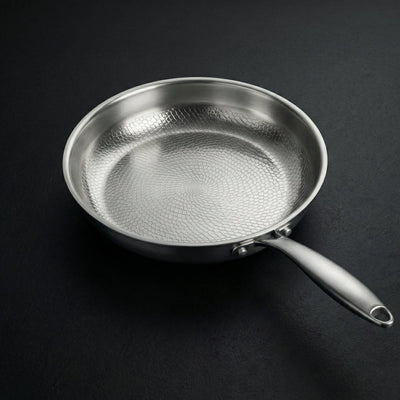
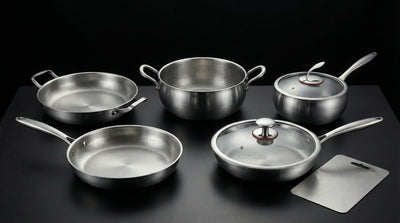
Titanium cookware takes the opposite approach: there is no coating to wear out because the cooking surface is the metal itself. Solid titanium is inert and non-toxic, free of PFAS, PTFE, lead and cadmium, safe with metal utensils, and rated from induction through to the oven. Properly pre-heated, it releases food naturally — and because that release comes from the metal and your technique rather than a film, it does not fade on a two-year timer.
Titanium's honest trade-offs: a brand-new ceramic pan will feel slicker on day one, and titanium asks you to learn the preheat rather than pouring cold eggs into a cold pan. It also costs more up front. What you get for that is permanence.
A new ceramic pan is slicker on day one. A solid titanium pan is still the same pan in year five — the difference is whether the surface is a coating or the metal itself.
Ceramic vs titanium, side by side
- Day-one non-stick: ceramic edges it.
- Non-stick after 2–3 years: titanium, comfortably — ceramic typically fades.
- Metal utensils: titanium only; metal ruins ceramic.
- High heat: titanium handles it; ceramic degrades faster.
- Upfront price: ceramic is cheaper.
- Cost over a decade: titanium, once you count replacements.
Everyday use and cleaning
Both materials are easy to live with in the short term — ceramic wipes clean while its coating is intact, and titanium cleans up quickly with a little care after preheating. The divergence is over time. With ceramic you gradually adjust your habits to protect the coating: lower heat, no metal, gentle sponges, and eventually acceptance that the release is fading. With titanium there is nothing to protect in that way — you can use metal turners, crank the heat for a sear, and scrub without worrying you are shortening the pan's life. That freedom, more than day-one slickness, is what separates a coated pan from a solid one.
Which should you buy?
If you want the lowest price and do not mind replacing a pan every couple of years, a good PFAS-free ceramic pan cooks well while the coating lasts. If you would rather buy once and cook on the same inert surface for decades — with metal utensils and high heat on the table — solid titanium is the more durable choice. Explore it in our Japanese pans collection.
The Cookware
Built to Last
Uncoated grade-1 titanium. No PFAS, no coatings, backed by a 25-year warranty.
Shop the Collection