



Comparisons
Non-Stick vs Stainless Steel: Which Pan Wins
The non-stick vs stainless steel decision is the one almost every kitchen faces, and it usually comes down to a single trade: ease versus durability. Non-stick makes cooking effortless but wears out; stainless steel lasts for years but asks for technique. Understanding what each gives up is the fastest way to choose — and there is a third option worth knowing about.
Non-stick pans: effortless, but temporary
A conventional non-stick pan is a metal body with a slick coating — usually PTFE-based — sprayed on top. The upside is obvious: eggs slide, pancakes flip, cleanup is a wipe, and you can cook with very little fat. For delicate foods, nothing is easier.
The honest downsides are just as real. That coating is a consumable: it scratches, degrades on high heat, and typically loses its release within two to three years, at which point the whole pan is replaced. Traditional non-stick coatings raise PFAS and PTFE questions, they are not safe with metal utensils, and they should be kept to low and medium heat — which rules out a proper sear and the browned fond that builds flavour.
Stainless steel: durable, but demanding
Stainless steel is the opposite personality. It is tough, non-reactive, safe with metal utensils, and it takes high heat without complaint — so it browns meat, deglazes and builds fond that non-stick never will. There is no coating to wear out, and a good clad pan lasts decades.
The catch is that bare stainless is not non-stick at all. Cook eggs or fish without a proper preheat and enough fat, and they will weld to the surface. There is a genuine technique to it, and cleanup after a sticky session takes more effort.
Non-stick is easy but disposable. Stainless is durable but demanding. Each pan asks you to give up something — convenience or permanence.
Non-stick vs stainless, at a glance
- Ease of release: non-stick wins — while the coating lasts.
- Durability: stainless wins, easily.
- High-heat searing and fond: stainless only.
- Metal utensils: stainless only.
- Low-fat, delicate foods: non-stick is more forgiving.
- Replacement cycle: non-stick every few years; stainless rarely.
A third option: solid titanium
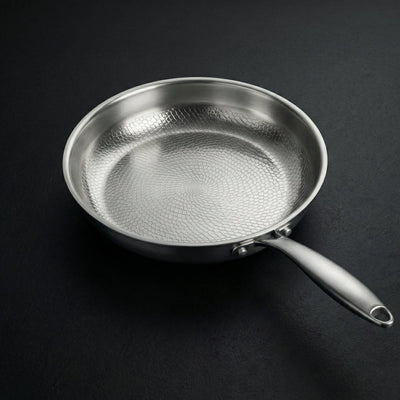
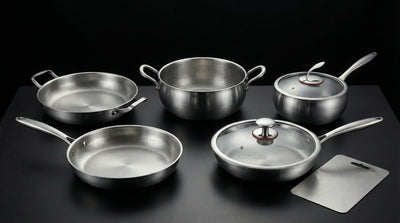
There is a way to keep non-stick's natural release without the coating and without stainless steel's stickiness. A solid titanium pan is bare metal — no PFAS, PTFE, lead or cadmium — that releases food naturally once properly pre-heated. It is safe with metal utensils, takes the high heat that browns and sears, moves from induction to oven, and has no coating to wear out on a two-year clock. The honest trade is a short learning curve: like stainless, it rewards a preheat rather than cold-pan cooking. But it gives you easy release and durability at once, which is exactly the compromise non-stick and stainless each force you to make. See it in the hand-hammered titanium pan.
Which should you buy?
If you cook mostly delicate, low-fat foods and accept replacing a pan every few years, a quality non-stick pan is the easiest tool for the job. If you want durability, high-heat performance and pan sauces — and do not mind learning the technique — stainless steel is a lasting workhorse. And if you want both release and permanence without a coating, solid titanium is built precisely for that gap.
The Cookware
Built to Last
Uncoated grade-1 titanium. No PFAS, no coatings, backed by a 25-year warranty.
Shop the Collection