



Japanese Knives
Gyuto Knife: The Japanese Chef's Knife
The gyuto knife is the Japanese answer to the Western chef's knife — and for many cooks, the single most useful blade they own. If you want one knife that can handle proteins, produce and nearly everything in between, this is the shape to understand. Here is what a gyuto is and why it has become the go-to all-rounder.
What "gyuto" means
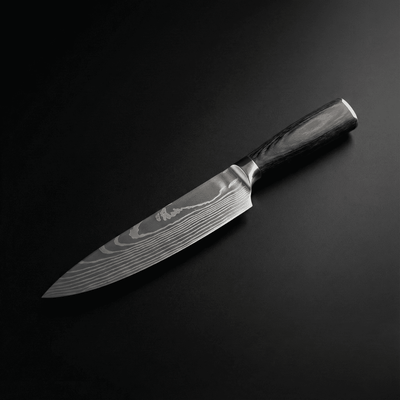
Gyuto translates loosely as "beef sword," a hint at its origins as a knife for cutting meat when Western-style cooking arrived in Japan. Today it is a true all-purpose chef's knife: a double-bevelled blade — sharpened on both sides, comfortable for right- and left-handers — with a gently curved edge and a pointed tip. Think of it as the Japanese take on the classic chef's knife, usually thinner, lighter and keener.
Why it is so versatile
The gyuto's curved belly is the key. It lets you rock the blade through herbs and aromatics, slice cleanly through proteins, and power through larger vegetables, all with one tool. The pointed tip handles finer work like scoring or trimming. That combination is why the gyuto is the knife most cooks reach for first and put down last — it covers the widest range of tasks of any single shape.
If a kitchen could keep only one knife, a gyuto would be the safe choice. It does a little of everything, and most of it well.
Gyuto vs santoku
The most common comparison is with the santoku. Both are versatile all-rounders; the difference is in the profile. A gyuto is longer with a curved edge suited to a rocking cut, while a santoku is shorter and flatter, favouring a straight up-and-down chop. Cooks who like to rock tend to prefer the gyuto; those who like a compact, nimble knife often reach for the santoku. Neither is "better" — it is about how your hand likes to move.
Where it fits among Japanese knives
In the wider family, the gyuto is the generalist. A nakiri outperforms it on pure vegetable prep, a petty is handier for small detail work, but nothing matches the gyuto for sheer range. It is the natural anchor of a kitchen, with the specialists added around it. Our Japanese knife types guide shows how the shapes relate.
Choosing and using a gyuto
Look for good balance where the blade meets the handle, steel hard enough to take and hold a fine edge, and a length that suits your board and your hands. A longer blade slices more in one stroke; a shorter one feels more controllable. Because a gyuto is thin and keen, treat it accordingly: cut on wood or a soft board, hone it regularly, keep it dry, and it will stay effortless for years.
Is a gyuto right for you?
If you are building a kitchen from scratch and want the most capable single knife, the gyuto is the logical first buy — it will handle the majority of what you do before you ever add a specialist. If you already own a chef's knife and are curious about Japanese blades, a gyuto is the most natural, familiar step across.
The bottom line
The gyuto is the workhorse of the Japanese kitchen: one versatile, precise blade that covers the majority of what you do at the board. If you are building from scratch, it is the most logical place to start. Browse our chef's knives collection, each backed by a 25-year warranty.
The Cookware
Built to Last
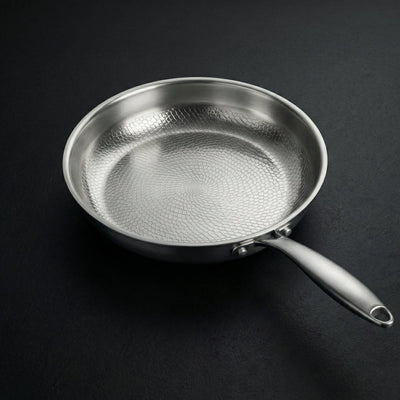
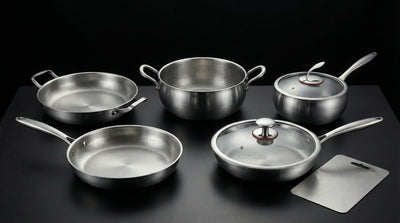
Uncoated grade-1 titanium. No PFAS, no coatings, backed by a 25-year warranty.
Shop the Collection