



Japanese Knives
Gyuto vs Santoku: Which to Buy
If you are weighing a gyuto vs santoku, you are looking at the two most versatile knives in a Japanese kitchen. Both are all-purpose blades built to handle the bulk of daily prep, and both can carry a home cook from breakfast to dinner without a second knife. The differences are real, though, and they come down to how you like to cut. Here is how the two compare, and how to decide which one belongs on your board.
The short answer
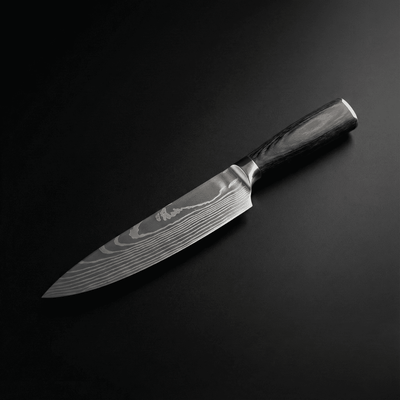
The gyuto is the Japanese take on the Western chef's knife: a longer, pointed blade with a gentle curve that suits rocking and slicing. The santoku is shorter, flatter and lighter, designed for clean downward cuts and quick, precise work. If you cook with big sweeping motions and want reach, lean gyuto. If you value control, agility and a knife that feels nimble in a smaller kitchen, lean santoku.
What a gyuto does best
Gyuto translates roughly as "beef knife," and the name hints at its range. The longer blade gives you the length to break down larger cuts of meat, slice through a big squash, or portion a roast in a single confident pass. The pointed tip is useful for detail work and for getting into tight spots. Because the edge keeps a subtle curve, a gyuto rocks comfortably against the board, which is the motion most cooks trained on a Western chef's knife already know. If you want one knife that does almost everything and feels familiar, the gyuto is hard to beat.
What a santoku does best
Santoku means "three virtues," a nod to its ease with meat, fish and vegetables. Its blade is flatter and shorter, which changes the way it moves: instead of rocking, you cut with a straight up-and-down or push motion. That flat profile keeps more of the edge in contact with the board on each cut, so slices come out even and the knife feels planted and controlled. The shorter length makes it light and easy to steer, which is exactly why so many home cooks reach for it first. For everyday vegetable prep and precise slicing, the santoku is a joy.
A gyuto rewards reach and rocking; a santoku rewards control and clean downward cuts. Neither is better — they suit different hands.
Blade shape and how you cut
The single biggest difference is the profile. A gyuto's curved belly is made to rock: you keep the tip on the board and sweep the heel down through the food. A santoku's flatter edge is made to chop: you lift and drop, or push forward slightly, letting the whole edge do the work. Try to rock a santoku and it feels awkward; try to chop straight down with a gyuto and you lose some of its advantage. Match the knife to the motion you naturally use and both feel effortless.
Size, weight and control
Gyuto blades usually run longer, which buys you reach and slicing power but asks for a little more space and a steadier hand. Santoku blades are typically shorter and lighter, which trades some reach for agility and comfort — a real advantage if you have smaller hands, a compact kitchen, or you simply prefer a knife that feels quick. Neither is heavy by Western standards; both are built to feel balanced and precise rather than brute-force.
Which should you buy?
For most home cooks it comes down to habit and hand feel:
- Choose a gyuto if you want maximum versatility, you break down larger cuts of meat, or you already cut with a rocking motion.
- Choose a santoku if you want control and comfort, you do a lot of vegetable prep, or you prefer a lighter, more agile knife.
- Still unsure? Many cooks end up owning both — a gyuto as the workhorse and a santoku for quick, precise jobs. They complement each other rather than compete.
Whichever way you lean, the knife is only as good as its steel and its edge. A well-made Japanese blade holds a keen edge longer and feels alive in the hand — which is the whole point of cooking with a proper knife. Browse the santoku knives collection to see the santoku up close, and if you want the wider picture first, our guide to Japanese knife types explains where each blade fits.
Buy the shape that matches the way you cook, keep it sharp, and it will earn its place on your board for years.
The Cookware
Built to Last
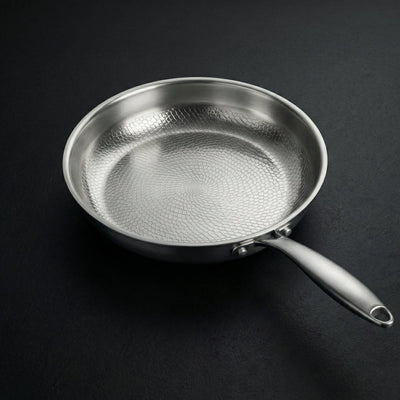
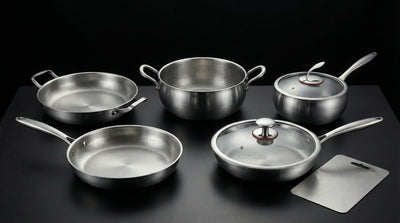
Uncoated grade-1 titanium. No PFAS, no coatings, backed by a 25-year warranty.
Shop the Collection