



Care & How-To
How to Clean a Non-Stick Pan the Right Way
Knowing how to clean a non-stick pan the right way is mostly about knowing what not to do. The surface that makes these pans convenient is also the part that wears out first, and rough cleaning is what shortens their life more than cooking ever does. Treat the surface gently and it lasts longer; scrub it like a stainless pot and you will be shopping for a replacement sooner than you should. Here is the method, and the mistakes worth avoiding.
Let the pan cool first
The most common mistake happens before any cleaning: dropping a hot pan into cold water. That thermal shock warps the base — so it no longer sits flat on the burner — and stresses a coating until it starts to lift. Always let a non-stick pan come down to warm or room temperature before it meets water. A few minutes of patience protects both the shape and the surface.
The everyday clean
For a normal cook, cleaning is quick and low-effort:
- Wipe out excess oil with a paper towel.
- Wash with warm water, a little mild dish soap, and a soft sponge or cloth.
- Rinse and dry with a soft towel.
That is genuinely all a lightly used non-stick surface needs. Avoid steel wool, scouring pads, abrasive powders, and the rough green side of a sponge — every one of them scratches the coating, and once it is scratched, food starts to stick exactly where you cleaned hardest.
Lifting stuck-on food
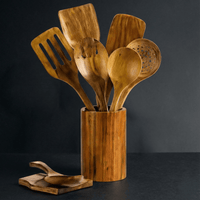
When something bakes on, do not attack it. Instead, loosen it. Add warm water and a drop of soap to the pan and let it soak for fifteen to thirty minutes; most residue will wipe away afterwards. For stubborn spots, simmer a little water in the pan for a few minutes to soften the food, then wash as normal once it has cooled. A wooden or silicone spatula lifts the rest — never a metal scraper on a coated pan.
A coated non-stick surface is a consumable layer. Cleaning gently is really about buying it more time.
The habits that quietly ruin non-stick
A coated pan usually fails from care, not cooking. The big four:
- The dishwasher. Harsh detergents and long hot cycles degrade most coatings, whatever the box says. Hand washing wins.
- Metal utensils. Every scrape leaves a channel in the coating.
- Abrasive scrubbers. They win the battle with a stuck egg and lose the war with the surface.
- High, empty heat. Blasting an empty coated pan on a high flame breaks the surface down faster and is best avoided.
When the pan has no coating to protect
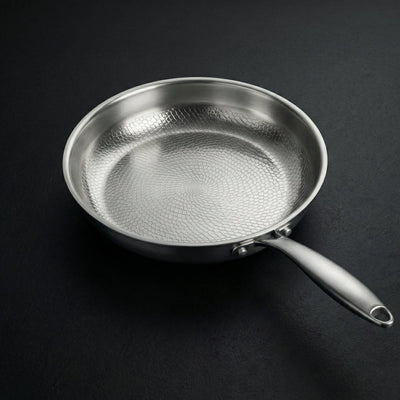
This is where the material changes the whole conversation. A solid titanium pan has no sprayed-on film to scratch, peel, or dissolve — it is one piece of metal. That makes cleaning far more forgiving: you can use a normal sponge with a bit of scrub, reach for metal utensils, and not panic over a stuck-on patch. Stubborn residue lifts with the same warm-water soak, and because there is no coating on a countdown, you are not nursing a surface toward its expiry date. It is a genuinely different ownership experience — less caution, and no replacement cycle built in.
If you are tired of babying a coating, that trade is the appeal of solid titanium. See the hand-hammered titanium pan, or compare the options in our guide to the best titanium cookware.
The Cookware
Built to Last
Uncoated grade-1 titanium. No PFAS, no coatings, backed by a 25-year warranty.
Shop the Collection