



Titanium Safety
Is Titanium Cookware Good? An Honest Verdict
Is titanium cookware good? The honest answer is yes, for most people who cook regularly — but "good" depends on what you want from a pan. Titanium is exceptional at some things and asks for patience with others. Here is a straight verdict across the things that actually matter: safety, performance, durability, weight, and value.
On safety: excellent
This is titanium's strongest suit. Solid titanium is biocompatible and inert — trusted for surgical implants meant to stay inside the body for decades. It forms a stable oxide layer that stops it reacting with acids, salts, or the chemistry of cooking, and it carries no PFAS, PTFE, PFOA, lead or cadmium in the cooking surface. There is no coating to wear off into your food. If safety is your priority, little else comes close; our guide on whether titanium cookware is safe covers the science in full.
On performance: very good, with a short learning curve
Titanium is naturally non-stick when you pre-heat properly and use a little fat — but it isn't a spray-on coating, so it doesn't give effortless cold-pan release on day one. Learn the routine (pre-heat, thin film of oil, let food form a crust before turning) and it performs beautifully. It also takes high heat without a coating's temperature ceiling, so searing is genuinely good.
Titanium isn't the easiest pan on day one. It's the pan you're still cooking on in twenty years.
On durability: outstanding
This is where titanium separates from coated cookware entirely. Because there's no coating, there's nothing on a two-to-three-year replacement clock. You can use metal utensils without scratching it, move it from induction to oven to open flame, and expect it to outlast most of your kitchen. That's why a solid titanium pan can be backed by a 25-year warranty — the material earns it.
On weight: a clear win
Titanium is roughly 45% lighter than stainless steel. If you've ever wrestled a heavy cast-iron skillet off a high shelf, the difference is immediate — you get serious durability without the dead weight, which matters more the more you cook.
On value: strong over time
At the register, titanium costs more than a budget coated pan. But value isn't the sticker price — it's cost over the life of the pan. A coated pan replaced every few years quietly adds up, and each replacement is more waste. One titanium pan that lasts decades usually wins that math, especially for people who cook often.
Where titanium is a weaker fit: if you want the cheapest possible pan today and don't mind rebuying, or you refuse to change your cooking habits at all. For everyone else, the trade-offs are minor and the advantages are structural.
The bottom line
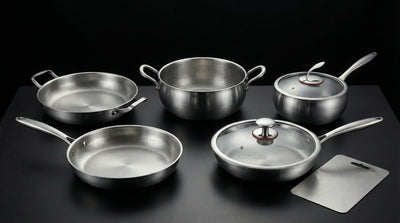
Is titanium cookware good? Yes — genuinely good on safety, durability, and weight, very good on performance once you learn it, and strong on value over time. The honest caveats are a short learning curve, a cosmetic heat tint, and a higher upfront price. For most people who cook regularly, that's an easy trade. Explore the range in our Japanese pans collection, each backed by a 25-year warranty.
The Cookware
Built to Last
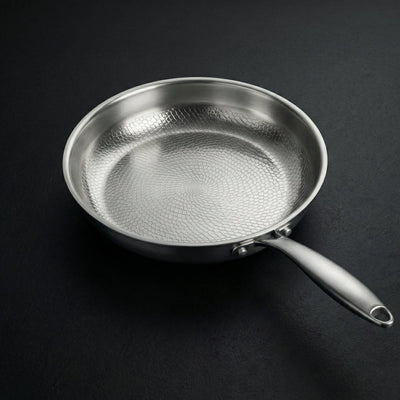
Uncoated grade-1 titanium. No PFAS, no coatings, backed by a 25-year warranty.
Shop the Collection