



Japanese Knives
Japanese Knife Set: How to Choose
A Japanese knife set can be the fastest way to outfit a kitchen — or an expensive way to end up with blades you never use. The trick is knowing which knives actually earn their place before you buy a block full of them. This guide walks through how to choose a set that fits the way you really cook.
Why a set, not a block of extras
Many mass-market sets pad the count with knives most people rarely touch, then wrap them in a bulky block. A good Japanese set works the other way around: a small number of versatile, well-made blades that each get used constantly. The question is never "how many knives," it is "which knives do the most work."
The core that covers most cooking
For the overwhelming majority of home kitchens, three shapes handle nearly everything:
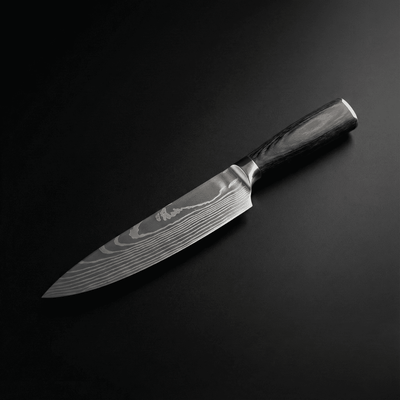
- A versatile main knife — a gyuto or a santoku for proteins, larger produce and general prep. This is the knife you will hold most.
- A vegetable knife — a nakiri, whose flat edge makes short work of slicing and dicing produce cleanly.
- A small utility knife — a petty for peeling, trimming and the fiddly detail jobs a large blade makes awkward.
Cover those three roles and you have handled the bulk of daily cooking. Everything beyond them is a specialist you add only if your cooking calls for it.
A good set is not the one with the most knives. It is the one where you reach for every knife in it.
Match the set to how you cook
Start from your board, not the catalogue. If you cook a lot of vegetables, weight the set toward a nakiri and a main knife. If you break down proteins often, prioritise a longer, versatile blade. If counter space is tight, a compact trio beats a sprawling block you have to store. The best set is the one whose every piece suits a job you actually do.
What makes the knives good
Within the set, judge each knife on the fundamentals: a keen, well-ground edge, steel hard enough to hold that edge, comfortable balance in the hand, and consistent quality across every piece rather than one hero knife and a few afterthoughts. A coordinated set should feel like a family, with the same care shown in the smallest blade as the largest.
Build gradually or buy together
There are two sound approaches. You can build piece by piece — start with a versatile main knife and add a nakiri and a petty as you go — or buy a coordinated set so the knives match in style and quality from day one. Either works; the set simply gets you there in one step. If you would like to understand the individual shapes first, our Japanese knife types guide covers each in turn.
Caring for the set
However many knives you settle on, the care is the same: cut on wood or a soft board, hand wash and dry each blade rather than using a dishwasher, hone regularly, and store them so the edges are protected. A well-kept set of a few good knives will outlast a drawer of neglected ones many times over.
The bottom line
Choosing a Japanese knife set comes down to a simple test: will you use every knife in it? Aim for a versatile main blade, a vegetable knife and a small utility knife, insist on quality across the board, and skip the padding. See the options in our chef's knives collection, each backed by a 25-year warranty.
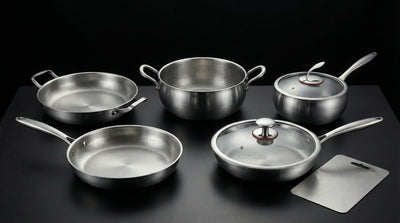
The Cookware
Built to Last
Uncoated grade-1 titanium. No PFAS, no coatings, backed by a 25-year warranty.
Shop the Collection