



Care & How-To
Whetstone Grit Chart: A Simple Guide
If you have ever stood in front of a wall of sharpening stones wondering what the numbers mean, a whetstone grit chart clears it up fast. Grit is simply how coarse or fine the stone's abrasive is: low numbers cut steel quickly and rough, high numbers refine and polish. Match the grit to the job and sharpening becomes straightforward. Here is the chart, and how to use it.
What "grit" actually measures
The grit number counts abrasive particles per unit area. A low number — say 220 — means large, aggressive particles that remove metal fast but leave a coarse edge. A high number — say 6000 — means tiny particles that remove very little metal but leave a smooth, keen, polished edge. Neither is "better." They are different steps in the same process: coarse stones shape and repair, fine stones sharpen and finish. Most sharpening moves from low grit to high.
The whetstone grit chart
Grit ranges fall into four broad bands. Use this as your map:
- Coarse — 120 to 400 grit (repair): for fixing chips, re-profiling a damaged edge, or reviving a very dull, neglected blade. Removes a lot of steel quickly. You will not need this often.
- Medium — 700 to 2000 grit (sharpening): the workhorse range. This is where you set a genuinely sharp edge on a knife that has gone dull with normal use. A 1000-grit stone is the classic all-rounder.
- Fine — 3000 to 6000 grit (finishing): refines the edge left by the medium stone, smoothing and polishing it so it cuts more cleanly and lasts longer. Great for kitchen knives you want scary-sharp.
- Ultra-fine — 8000 grit and above (polishing): a mirror polish and a razor edge, used by enthusiasts and on single-bevel Japanese knives. Lovely, but more than most home cooks need.
Low grit shapes, high grit refines. Almost every sharpening job is just moving from one to the other.
Which stone should you actually buy?
For most home kitchens, the honest answer is one or two stones, not a full set. A single 1000-grit stone will sharpen a dull knife well. Add a 3000 to 6000-grit side for finishing and you can take a blade from dull to excellent. This is exactly why combination stones exist — a 1000/6000 dual-grit block covers the two steps most people ever use. Reserve a coarse repair stone for the rare chipped or badly neglected blade; you can always buy one when you actually need it.
How to progress through the grits
Sharpening is a sequence. Start on the lowest grit the blade needs — for routine dullness that is your medium stone — and work until you have raised a slight burr along the whole edge. Then move up to the next grit to refine that edge, and again if you are finishing. Each stone cleans up the scratches left by the one before it. Skipping straight to a fine stone on a truly dull knife just wastes time, because a polishing stone barely removes metal.
Grit versus honing
One common mix-up: a honing rod is not a grit at all. Honing realigns an edge that has rolled slightly out of true — it straightens, it does not sharpen. Whetstone grit is about actually removing metal to create a new edge. Hone often to keep a sharp knife sharp; reach for the stones when honing no longer brings the edge back.
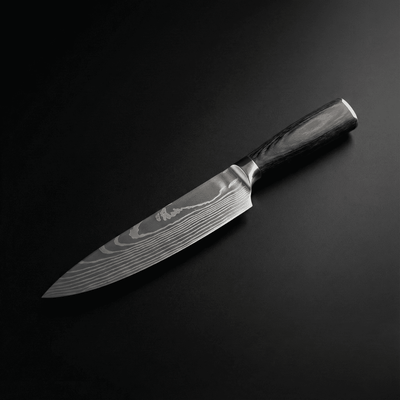
Before your first pass, get the stone ready properly — our guide to how long to soak a whetstone covers the timing. And if you are building a kitchen around blades worth sharpening, start with our Japanese chef's knives.
The Cookware
Built to Last
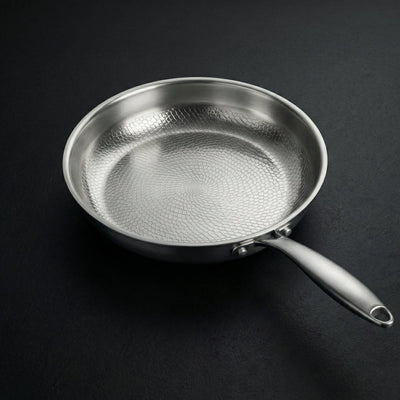
Uncoated grade-1 titanium. No PFAS, no coatings, backed by a 25-year warranty.
Shop the Collection