



Care & How-To
Cutting Board Oil: Which One & How to Use It
A good wooden board is worth looking after, and cutting board oil is the single habit that decides how long it lasts. Left dry, wood loses its natural moisture, then cracks, warps, and starts trapping water in the splits — which is exactly where bacteria like to sit. A few minutes of oiling every so often prevents all of it. Here is which oil to use, which ones to keep away from your board, and how to apply it properly.
Why wooden and bamboo boards need oil
Wood is a natural material, and it behaves like one. Every time you wash a board and let it dry, a little of its internal moisture leaves with the water. Over weeks and months the surface dries out, the fibres shrink unevenly, and the board begins to cup, split, or feel rough under the knife. Oil replaces that lost moisture and fills the microscopic pores in the grain, so water sheds off the surface instead of soaking in. A well-oiled board resists staining, holds its shape, and simply feels better to cut on.
Which oil to use
The rule is simple: use a food-safe oil that does not go rancid. Two options cover almost every board.
- Food-grade mineral oil: the standard choice. It is inexpensive, odourless, tasteless, and — because it is inert — it never spoils. This is what most board makers recommend.
- Board cream or board butter: a blend of mineral oil and a natural wax such as beeswax or carnauba. The oil conditions the wood while the wax leaves a light water-resistant layer on top. Many people oil first, then finish with a cream.
You will sometimes see fractionated coconut oil sold for boards too; the fractionated (refined) version is shelf-stable and works, but plain mineral oil is the most reliable and widely available.
Which oils to avoid
This part matters more than the oil you choose. Do not use everyday kitchen oils on a board. Olive oil, vegetable oil, canola, sunflower, and most nut oils are drying or unsaturated oils — over time they oxidise and turn rancid inside the wood, leaving a sticky film and a sour smell you cannot wash out. They may be food, but they are the wrong tool for conditioning a board. Stick to mineral oil or a proper board cream.
If an oil can go off in your pantry, it can go off inside your board. Choose one that never spoils.
How to oil a cutting board, step by step
The process takes five minutes of hands-on time and a little patience while it soaks in.
- 1. Start clean and dry. Wash the board, wipe it down, and let it dry fully — a few hours, ideally overnight. Oil will not penetrate a damp board.
- 2. Apply a generous amount. Pour a tablespoon or so of mineral oil onto the surface and spread it with a clean, lint-free cloth or paper towel. Work it into the grain, and do not forget the sides and the underside.
- 3. Let it soak in. Leave the board flat for a few hours, or overnight for a dry board. The wood will drink up what it needs.
- 4. Wipe off the excess. Buff away anything that has not absorbed so the surface is conditioned, not greasy.
- 5. Finish with cream, optional. For extra water resistance, rub in a thin layer of board cream once the oil has set.
How often should you oil a board?
A useful starting point is "once a week for the first month, once a month after that" for a new board, then adjust to how the wood behaves. The board itself will tell you: if it looks dull, feels dry, or water no longer beads on the surface, it is asking to be oiled. Boards used and washed daily need it more often than one that comes out on weekends. Over-oiling is hard to do — the wood only absorbs what it can hold.
The boards that never need oiling
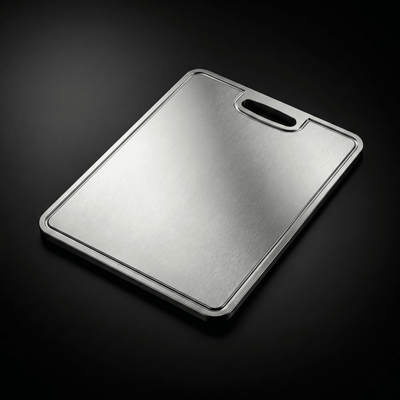
Not every board asks for this routine. Plastic boards do not absorb oil at all. And a solid titanium board sidesteps the entire question: because it is non-porous metal, there is no grain to dry out, nothing to crack or warp, and nothing to condition — you wash it and you are done. It is a genuinely different maintenance story from wood, and for some kitchens the appeal is exactly that there is no maintenance. If you love the feel of wood, oil it and it will serve you for years; if you would rather never think about it again, that is where a material like titanium earns its place.
Whichever surface you prefer, the right board is the one you will actually maintain. Browse the full range of cutting boards, or if you are still deciding on a material, our 2026 cutting board buyer's guide walks through wood, bamboo, plastic, and titanium side by side.
The Cookware
Built to Last
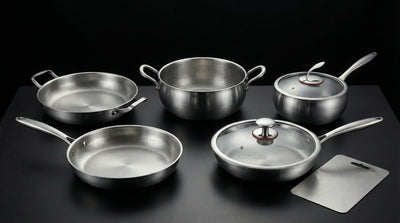
Uncoated grade-1 titanium. No PFAS, no coatings, backed by a 25-year warranty.
Shop the Collection