



Care & How-To
How to Remove Rust From a Knife Blade
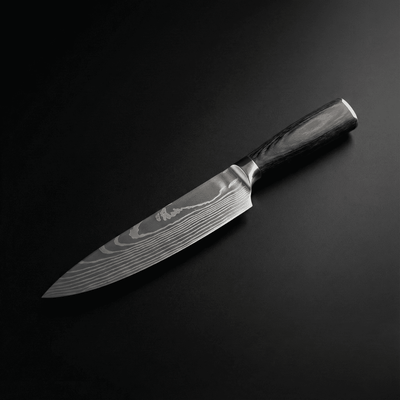
If you want to know how to remove rust from a knife blade, the good news is that most surface rust comes off with things you already have in the kitchen. Rust is simply iron reacting with oxygen and moisture, and on a good knife it is almost always cosmetic and reversible — as long as you catch it before it pits the steel. Here is how to clean it off safely, and how to stop it returning.
Why knives rust in the first place
Even "stainless" steel is only stain-resistant, not stain-proof. High-carbon Japanese knives, prized for how sharp they get, contain more carbon and less chromium, which makes them more reactive still. Rust forms when a blade is left wet, put away damp, or stored somewhere humid. The usual culprits are the same three every time: water left on the blade, acidic food residue, and a knife dropped in the sink to "deal with later." Fix those habits and rust rarely gets a foothold.
Method 1: Baking soda paste (start here)
For light surface rust, a baking soda paste is the gentlest effective option.
- Mix baking soda with a little water into a thick paste.
- Spread it over the rusted area and leave it for ten to fifteen minutes.
- Scrub gently along the length of the blade with a soft cloth, a wine cork, or the soft side of a sponge — always in the direction of the edge, never across it.
- Rinse, then dry the blade completely.
Method 2: Vinegar or lemon for stubborn spots
If the paste does not shift it, a mild acid will. Soak a cloth in white vinegar and lay it over the rust for five to ten minutes, or press the blade into the cut face of a lemon dipped in salt. The acid loosens the oxide so it wipes away with light scrubbing. Do not leave the blade soaking in acid for long — a few minutes is plenty, because acid attacks steel too. Rinse thoroughly and dry the moment you are done.
Method 3: A fine stone for pitting
Where rust has begun to leave shallow pits or a rough patch, a very fine sharpening stone or a purpose-made rust eraser can polish it back. Work lightly along the blade with plenty of water, checking often, so you remove the rust and not the geometry of the edge. This is a refinishing job, not a sharpening one — keep the pressure gentle and be patient.
Rust is reversible right up until it pits the steel. The sooner you deal with it, the less there is to remove.
How to stop rust coming back
Removing rust is easy; not needing to is easier. A few habits keep a blade clean for years:
- Hand wash and dry immediately. Never leave a knife wet, and never put a good knife in the dishwasher — the heat, detergent, and steam are a rust factory.
- Wipe after acidic foods. Tomatoes, citrus, and onions accelerate reactions on carbon steel. A quick wipe mid-prep helps.
- Store it dry and protected. A magnetic strip, a knife block, or a blade guard keeps the steel out of damp drawers and away from other metal.
- Oil carbon-steel blades occasionally. A thin film of food-safe mineral oil (camellia oil is traditional) shields a high-carbon blade between uses.
What about titanium?
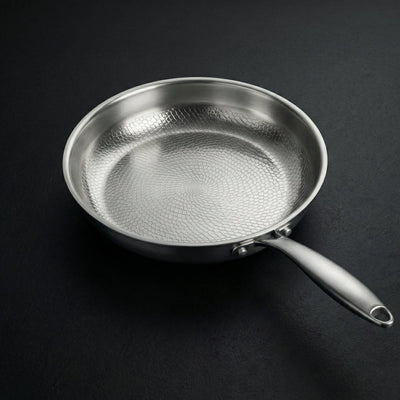
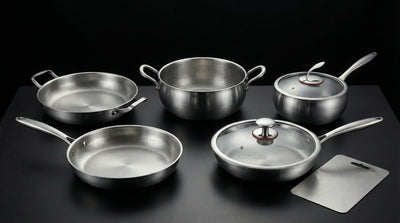
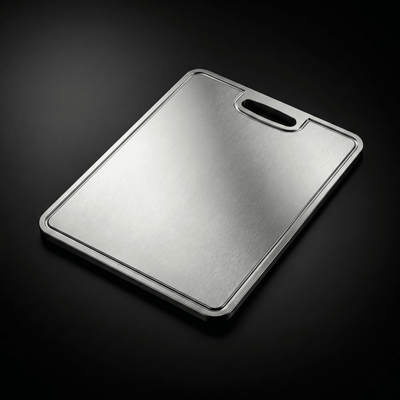
It is worth noting that not every kitchen metal rusts at all. Titanium does not: it forms a stable, self-renewing oxide layer that seals the surface, so it will not corrode the way carbon or even stainless steel can. That is one reason it shows up in cookware and boards meant to be low-maintenance. For a carbon-steel knife, though, rust is simply part of owning a high-performance blade — the trade for how keen an edge it takes, and entirely manageable with the steps above.
A clean, well-kept blade is a sharp one. Once your knife is rust-free, keep the edge honed and sharpened — our whetstone grit chart explains which stone does what, and how long to soak a whetstone before you start. Ready for a blade built to last? Explore our Japanese chef's knives.
The Cookware
Built to Last
Uncoated grade-1 titanium. No PFAS, no coatings, backed by a 25-year warranty.
Shop the Collection