
Japanese Knives
Nakiri Knife: The Vegetable Specialist
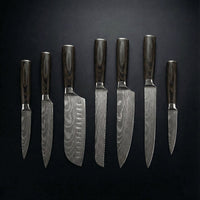
The nakiri knife is the blade that converts people to Japanese knives. Its flat, rectangular profile looks unusual next to a Western chef's knife, but pick one up for a night of vegetable prep and the logic is immediate — this is a tool built to do one thing exceptionally well. Here is what a nakiri is, how it cuts, and who should own one.
What a nakiri is
A nakiri is a double-bevelled Japanese vegetable knife with a straight edge and a squared-off, rectangular blade. "Double-bevelled" simply means it is sharpened on both sides, so it suits right- and left-handed cooks alike and needs no special technique to pick up. The defining feature is that flat edge: where a curved chef's knife touches the board at a single point, the nakiri meets it along its whole length.
Why the flat blade matters
That straight edge is the whole point. It lets you push straight down through a vegetable and reach the board cleanly in one motion — no rocking, no sawing, no half-attached slices clinging together at the bottom of the cut. Line up a carrot, a stack of greens or an onion and the nakiri goes clean through from heel to tip. The tall blade face also gives your knuckles clearance and doubles as a scoop for carrying prepped vegetables to the pan.
A curved blade touches the board at one point. A nakiri touches it along the whole edge — which is why the cut finishes clean.
What it is (and isn't) for
The nakiri is a vegetable specialist. It shines at slicing, dicing and fine julienne, and it makes quick work of a big pile of produce. It is not built for meat on the bone, for rock-chopping herbs the way a curved blade does, or for piercing and boning tasks — those belong to other shapes. If you want the full breakdown of jobs it handles, we cover it in what a nakiri knife is used for.
Nakiri vs the chef's knife
People often ask whether a nakiri replaces a chef's knife. It does not — it complements one. A gyuto or santoku is your versatile all-rounder for proteins and mixed prep; the nakiri is the specialist you reach for when the board is covered in vegetables. Many cooks keep both and use the nakiri far more than they expected. To see where it sits in the wider family, our Japanese knife types guide lays out every shape.
Choosing a nakiri
Look for a blade that feels balanced in the hand, a comfortable handle, and steel hard enough to hold a keen edge. Beyond that, a nakiri is refreshingly simple — there is no complicated curve to get used to, which is part of why it is such a satisfying knife to learn on. A knife that feels right in your grip will always beat one chosen on paper.
Caring for your nakiri
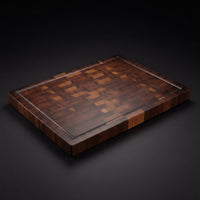
Treat it like any fine knife and it will last: cut on a wooden or soft board rather than glass or stone, hand wash and dry it straight away rather than leaving it wet or trusting a dishwasher, and hone the edge regularly to keep it keen. Small habits are what keep a good knife performing for years.
The bottom line
If you cook a lot of vegetables, the nakiri earns its place fast: a flat, purpose-built edge that turns tedious prep into clean, efficient work. Explore our chef's knives collection to find one, each backed by a 25-year warranty.
The Cookware
Built to Last
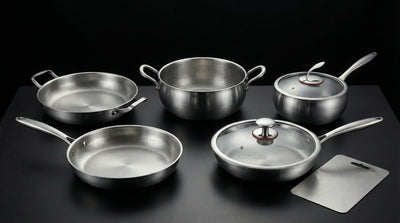
Uncoated grade-1 titanium. No PFAS, no coatings, backed by a 25-year warranty.
Shop the Collection