



Product Care
Using Your Pan in the Oven
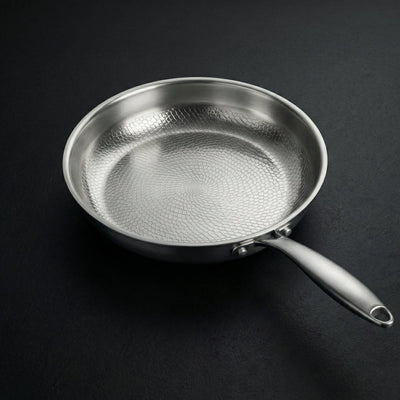
Your pan is oven safe up to 260°C (500°F), handle included — here's how to use it without burning your hand.
Moving straight from stovetop to oven is one of the real pleasures of owning a single-piece metal pan. Sear a steak, slide it in to finish, serve from the same pan. Here's what to know first.
The temperature limit
Your Okura pan is oven safe up to 260°C (500°F). That covers roasting, finishing a protein, baking a frittata, and cornbread. Stay at or below that figure, and set the oven by its dial rather than guessing — ovens run hotter than they claim more often than they run cooler.
The handle gets hot. Really hot.
The handle is part of the same piece of metal as the pan, so there's no insulated grip protecting you. In the oven it reaches oven temperature, and it stays hot long after the pan comes out. Two habits are worth building:
- Always use a dry mitt or a folded dry towel. A damp cloth conducts heat straight through to your hand.
- Leave something on the handle as a reminder. A mitt draped over it, or a towel, so nobody in the kitchen grabs it bare five minutes later. This catches almost everyone once.
Let the pan cool naturally on a trivet or a cool burner. Don't run cold water over it to speed things up.
Lids in the oven
If your pan came with a glass lid, treat the lid and the pan as separate items with separate limits. Glass lids and any plastic or silicone knob have their own, generally lower, temperature ceilings. When in doubt, leave the lid off and cover with foil instead.
About the broiler
Broilers are worth a note of caution. A broiler element sits close to the food and can push the surface well past what the oven dial suggests, and it's easy to exceed 260°C (500°F) without realizing it. If you use the broiler, run it on a lower rack, keep the time short, and stay in the kitchen watching. If you can't tell how hot your broiler runs, finish under the oven's roast setting instead.
Expect some color
Oven heat brings on heat tint — the golden and blue-purple sheen titanium develops. It's normal, it doesn't affect cooking, and it isn't a defect. See Why Is My Pan Discoloring?.
After it comes out
Let the pan cool completely, then wash gently and dry it thoroughly. Roasting can leave stuck-on residue — soak it in warm water rather than scouring it off, as covered in Cleaning and Maintaining Your Titanium Pan. For the stovetop side of things, see Which Stovetops Work With Okura.
Still Need Help?
We're Here For You
Send us your order number and what you've already checked — we'll sort it out.